
Field Application of Rod-type Magnetostrictive Displacement Sensor
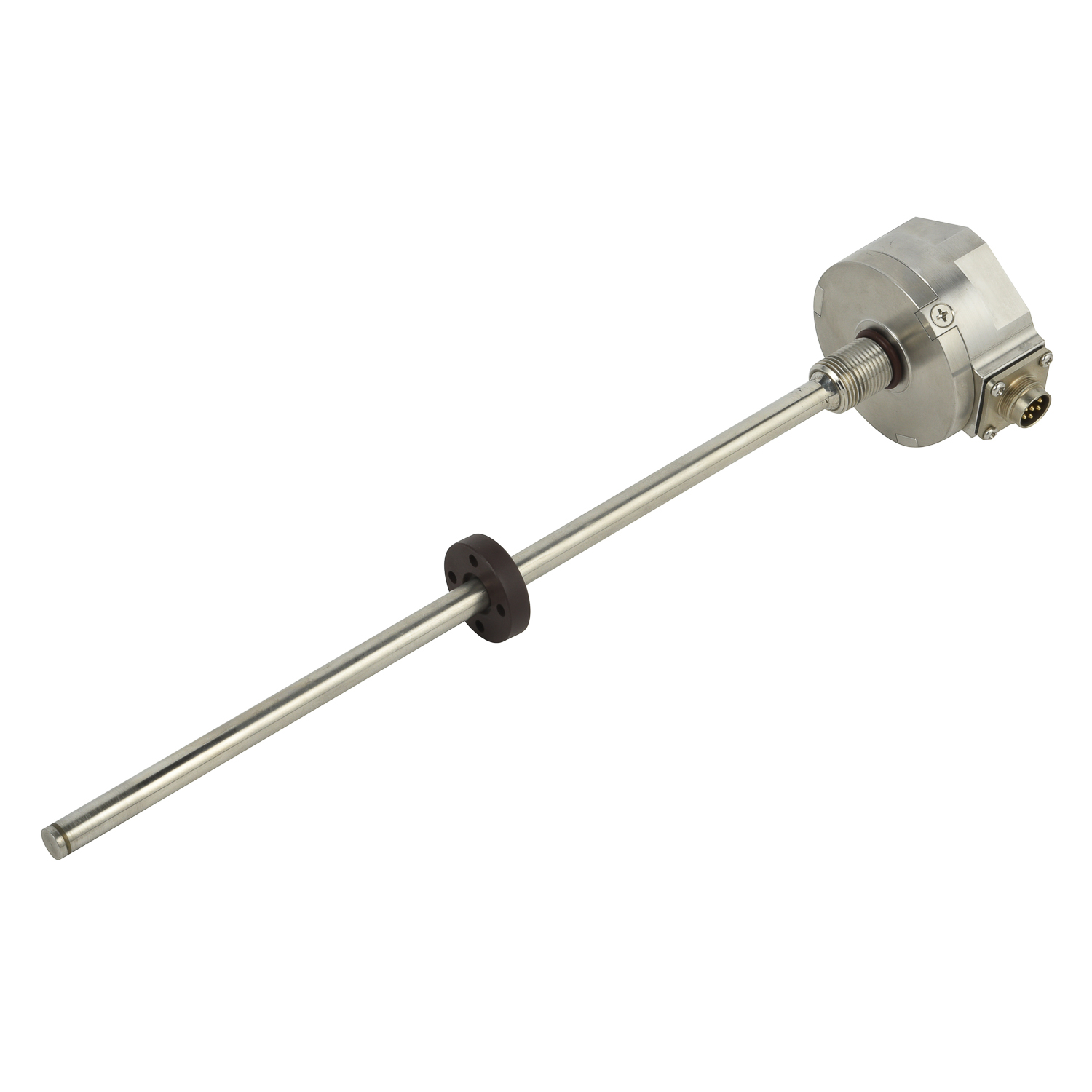
Rod-type magnetostrictive displacement sensors are widely used in industrial field applications where precise, reliable position feedback is required. Their rugged stainless-steel rod, non-contact measuring principle, and absolute output make them suitable for hydraulic cylinders, injection molding machines, steel mills, and offshore equipment. In a typical hydraulic system, the sensor rod is installed inside the cylinder bore or mounted along the moving axis. A permanent magnet attached to the piston or slide defines the position. The sensor measures the travel time of a torsional strain pulse, converting it into an absolute displacement value. This design resists oil, dust, vibration, and electromagnetic interference, so it performs well in harsh environments. Field engineers value the rod-type sensor because it needs no regular recalibration and provides stable linearity over long strokes. It supports analog and digital interfaces, such as 0-10 V, 4-20 mA, SSI, and CANopen, allowing direct connection to PLCs and motion controllers. During commissioning, users must align the rod, set the magnet gap, and verify grounding to reduce signal noise. Regular inspection of seals, connectors, and cable routing helps prevent water ingress and mechanical damage. In steel production, the sensor monitors roll gap and cylinder stroke under high temperature and shock. In offshore cranes, it provides boom angle and extension feedback despite salt spray. Such sensors support safer, smarter automation.
 Working Principle of High-pres
 Technical Parameters of High-t
 Waterproof Linear Displacement
 Intrinsically Safe Explosion-p