
Technical Parameters of High-temperature Linear Displacement Sensor
High-temperature linear displacement sensors provide precise position feedback in furnaces, turbines, and industrial equipment exposed to heat, vibration, and contamination. Their technical parameters determine measurement stability and service life.
Temperature range is critical. Standard models may operate from -40 degC to 200 degC, while ceramic or stainless-steel versions can reach 400 degC or higher. Low temperature coefficients for sensitivity and zero drift, plus thermal compensation, help maintain accuracy under changing ambient conditions.
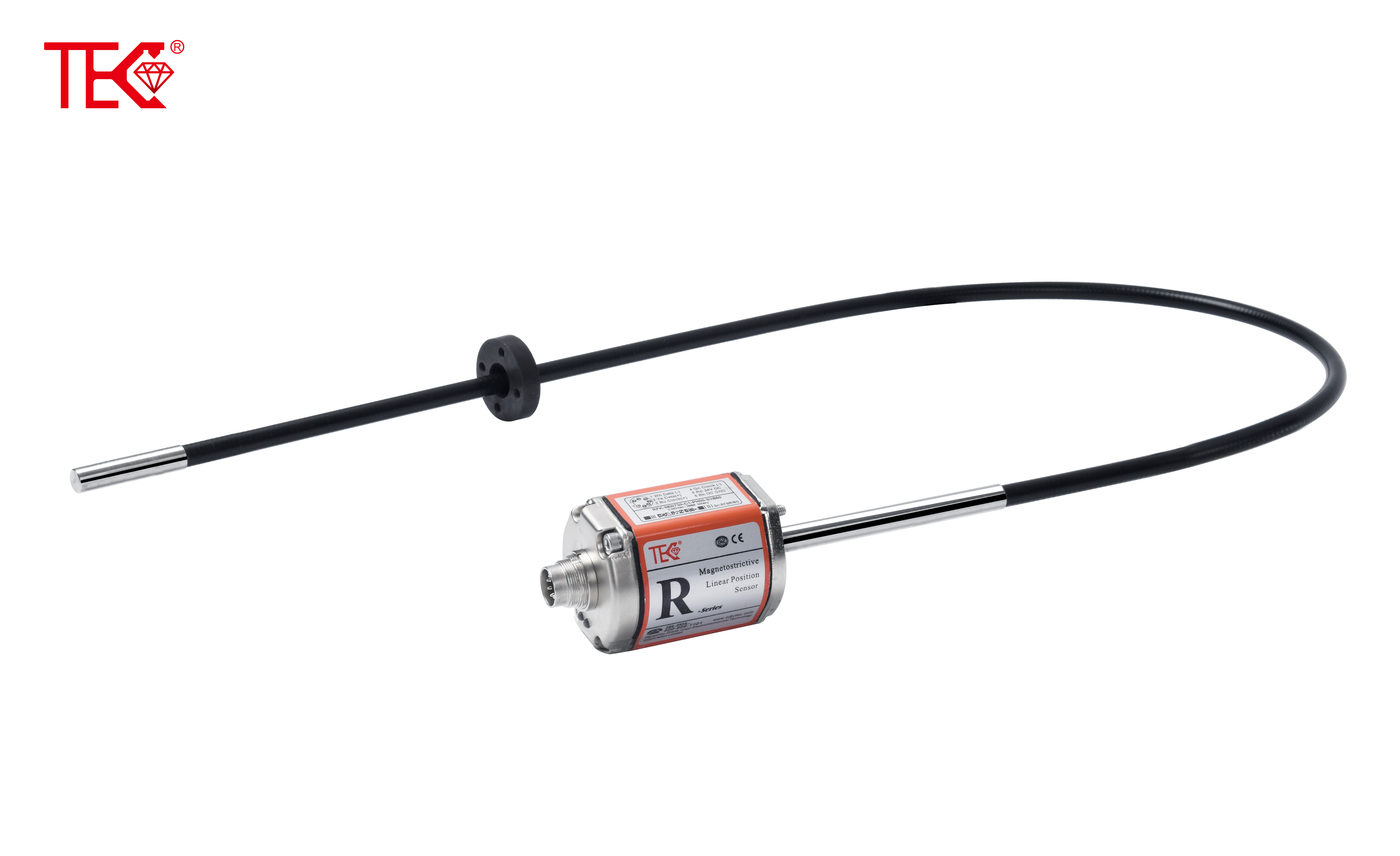
Range, linearity, resolution, and repeatability are closely linked. Common ranges are 10 mm to 500 mm. Linearity is often +/-0.05% to +/-0.5% of full scale, depending on technology and range. Resolution may be 0.001 mm or better, and repeatability should match or exceed linearity. Verify these values under real thermal gradients, not only at room temperature.
Outputs include 0-10 V, 4-20 mA, RS485, and CAN. Output stability, load capability, and noise immunity affect integration. Housings must resist oxidation, scale, and moisture; IP67 or higher protection is common. Cable insulation and seals must be rated for continuous heat exposure. Vibration resistance, shock limits, and mounting tolerance also influence reliability. Proper thermal isolation, rigid mounting, and regular calibration ensure accurate performance in demanding high-temperature motion systems. Routine inspection and thermal cycling tests support long-term reliability.
 Working Principle of High-pres
Technical Parameters of High-t
 Waterproof Linear Displacement
 Intrinsically Safe Explosion-p