
Working Principle of High-pressure Linear Displacement Sensor
High-pressure linear displacement sensors measure position accurately in hydraulic, oil-and-gas, and industrial systems where the sensing element must withstand severe pressure. Many designs use the linear variable differential transformer, or LVDT, principle. An AC-excited primary coil generates a magnetic field inside a robust stainless-steel housing. A movable ferromagnetic core is connected to a pressure-isolated sensing rod. As the rod moves, the core changes the magnetic coupling to two secondary coils. The induced voltages in these coils change differentially, and the difference in amplitude and phase represents the core position. A demodulator and signal-conditioning circuit convert this differential signal into a stable DC output proportional to displacement. Because the coil and core do not touch, the sensor offers high repeatability, low friction, and long service life.
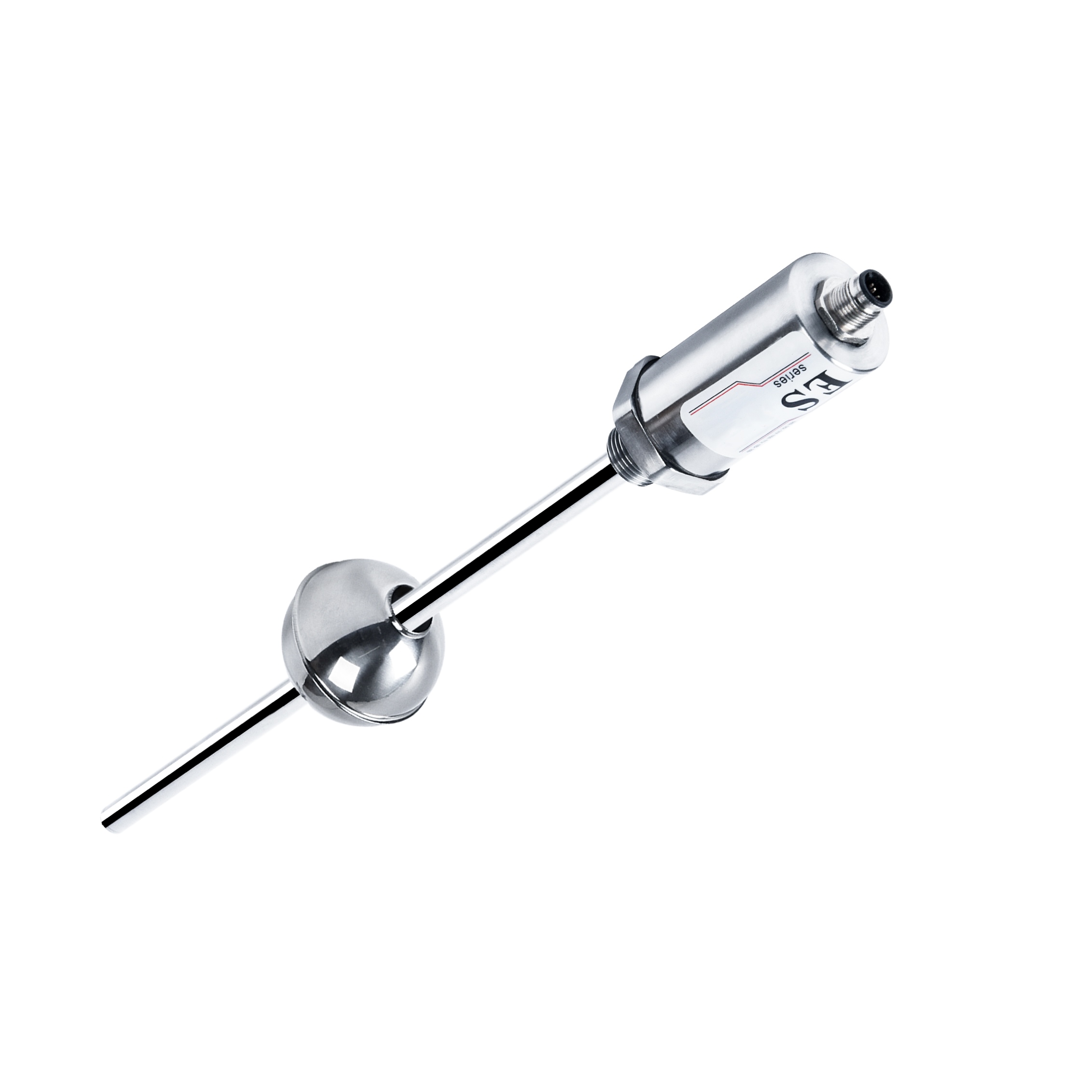
To survive high pressure, the sensor uses a thick-walled body, welded pressure barriers, reliable rod seals, and isolated electronics. Some models fill the coil chamber with oil and separate it from the process medium with a pressure-resistant diaphragm or isolation tube. This structure transfers mechanical movement to the core while protecting the coils from aggressive fluids. Temperature compensation and linearity correction improve accuracy under rapid pressure cycles, vibration, and harsh conditions. Users can choose voltage, current, or digital outputs, and factory calibration ensures consistent performance across the full measuring range. The result is reliable linear position feedback for valves, cylinders, presses, and test equipment.
Working Principle of High-pres
 Technical Parameters of High-t
 Waterproof Linear Displacement
 Intrinsically Safe Explosion-p