
Model and Specification of Turbine Flowmeter
A turbine flowmeter measures volumetric flow by converting fluid velocity into rotor rotation. Liquid passing through the meter body drives a multi-blade turbine. Rotor speed is proportional to flow rate. A magnetic pickup detects blade pulses and sends a frequency signal to a transmitter or display. This design offers high accuracy, fast response, and low pressure loss for clean, low-viscosity fluids.
Model names often reflect structure and output. Common series include LWGY, LWGYA, LWGYB, and LWGY-C. Basic models provide local indication. Transmitter models add 4–20 mA or pulse output. Smart models support RS485, HART, or Modbus. Sanitary models use clamp connections; explosion-proof models suit hazardous areas.
Key specifications must match the application. Nominal diameters range from DN4 to DN200 or larger. Flow range depends on size and viscosity. Accuracy is often ±0.5% or ±1.0% of reading; repeatability can reach 0.1%. Pressure may be 1.6 MPa, 2.5 MPa, 4.0 MPa, or higher. Medium temperature ranges from -20°C to 120°C, with high-temperature versions to 250°C. Outputs include pulse, 4–20 mA, RS485, and LCD totalization.
Materials and installation affect selection. Wetted parts are usually 304 or 316 stainless steel; special fluids may need Hastelloy or PTFE. Install on straight pipe and keep it full. Choose a model by verifying flow range, viscosity, temperature, pressure, connection, and output. A correctly specified turbine flowmeter gives reliable measurement for clean water, fuel, and chemicals.
 Pressure Sensor Manufacturer
 Corrosion-resistant Pressure S
 Rod-type Pressure Sensor
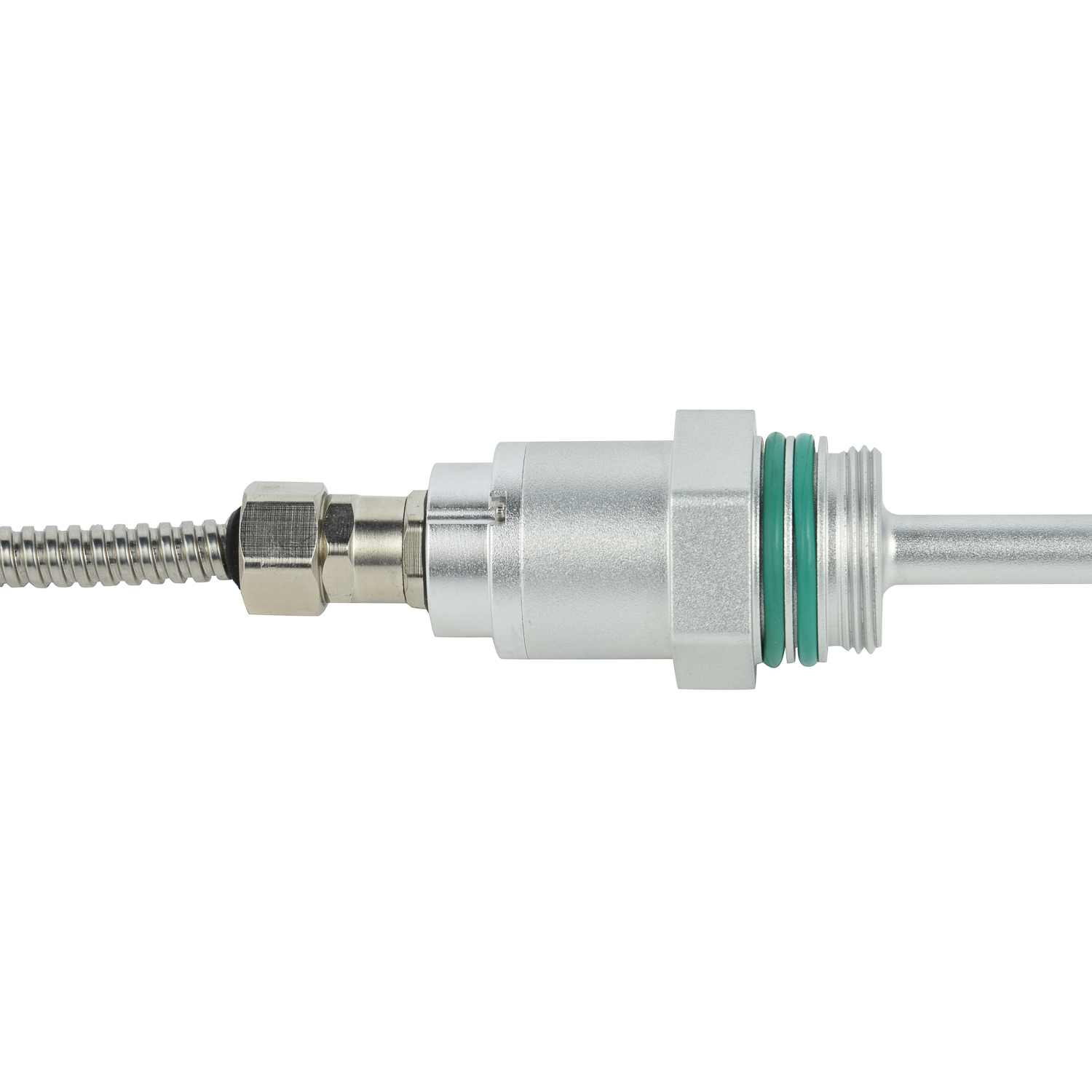 Flange-mounted Pressure Sensor