
ATaleofTwoTechnologies:Magnetostrictivevs.LVDTDisplacementSensors
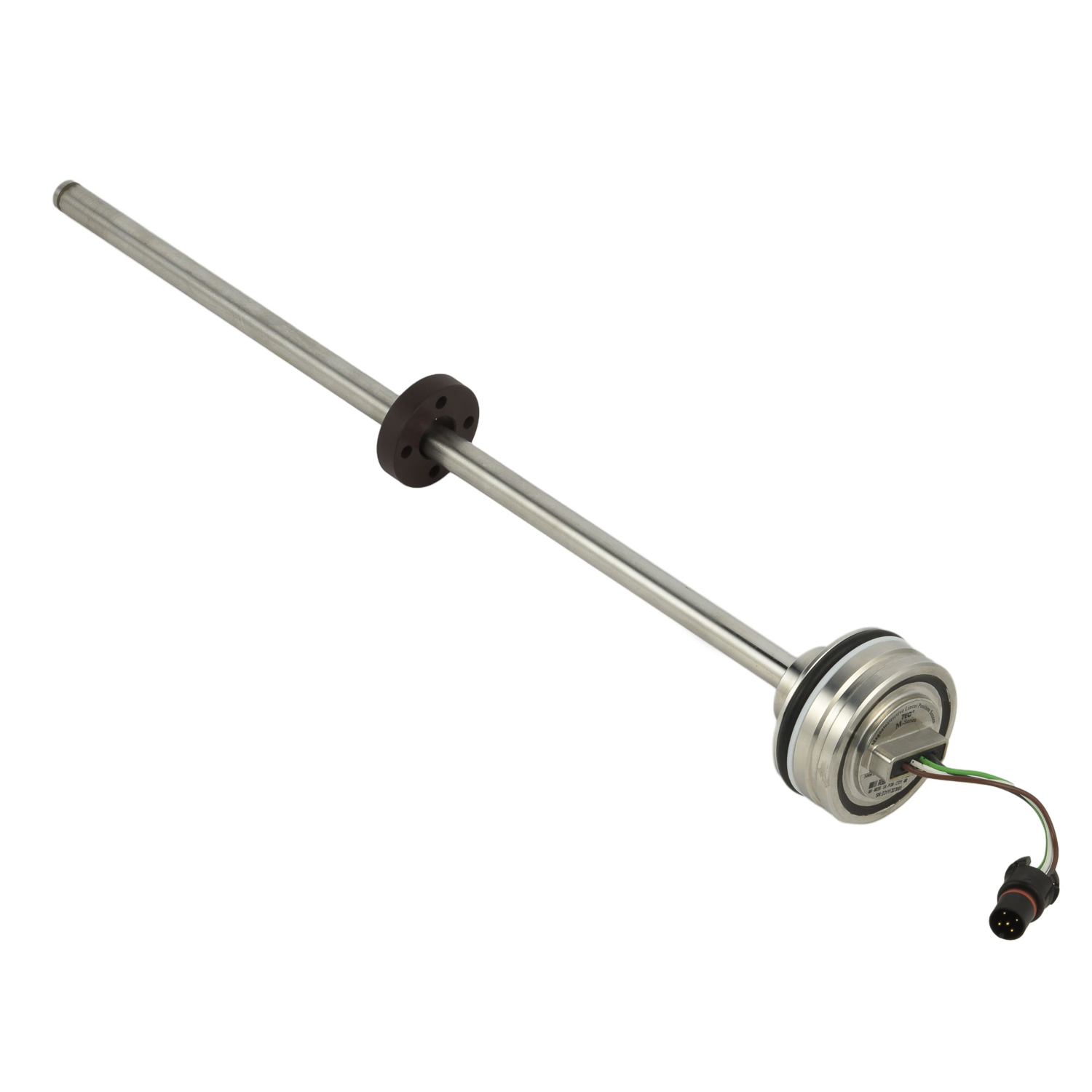
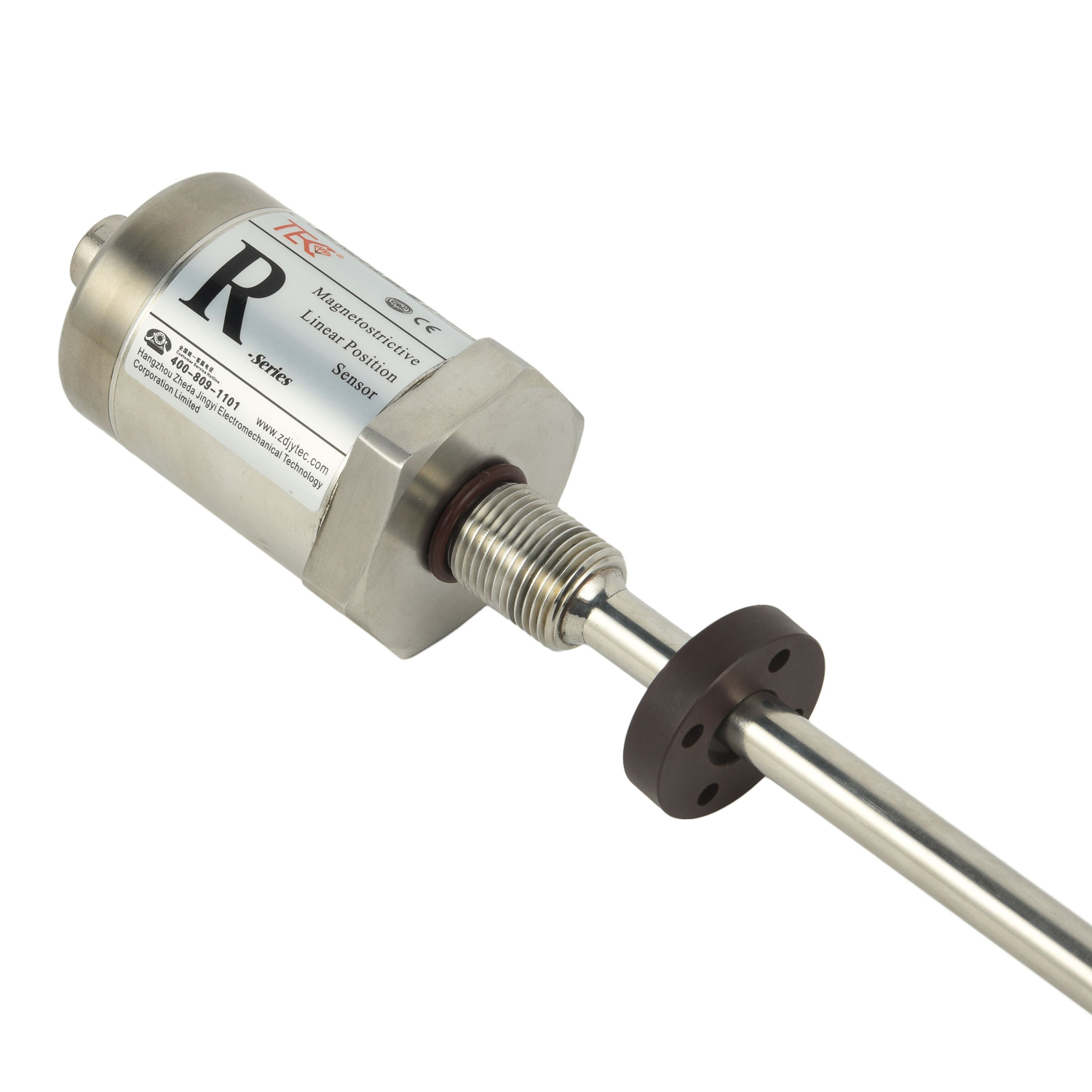
In the precise world of industrial automation and motion control, selecting the right displacement sensor is critical. Two dominant technologies stand out: magnetostrictive sensors and Linear Variable Differential Transformers (LVDTs). While both excel at measuring linear position, their underlying principles and ideal applications differ significantly. This comparison will guide you through their unique characteristics.
Core Operating Principles: Magnetic Wave vs. Electromagnetic Induction
Magnetostrictive sensors operate by generating a torsional stress wave in a waveguide. A moving permanent magnet interacts with a current pulse, and the time-of-flight of the resulting wave is measured to determine position with exceptional accuracy. In contrast, an LVDT functions as a transformer. It consists of a primary coil and two secondary coils, with a movable ferromagnetic core. The core's position changes the inductive coupling, producing a voltage differential that is linearly proportional to displacement.
Accuracy and Resolution: The High-Precision Showdown
When it comes to raw precision, magnetostrictive sensors often hold an edge, offering sub-micron resolution and excellent long-term stability. They are ideal for closed-loop control systems requiring absolute position feedback. LVDTs are also highly accurate and provide infinite resolution. Their key strength lies in true null position detection and outstanding repeatability, making them a favorite in metrology and laboratory settings.
Robustness and Environmental Suitability
Magnetostrictive sensors are renowned for their durability. With no mechanical contact between the sensing element and the magnet, they offer a virtually infinite mechanical life. They are well-suited for harsh environments with vibration, shock, and contaminants. LVDTs, while robust, have a moving core that can be sensitive to extreme misalignment or binding. However, hermetically sealed LVDTs can excel in high-pressure or fluid-immersed applications where magnetostrictive waveguides might be compromised.
Application-Specific Strengths and Limitations
Magnetostrictive technology shines in hydraulic cylinder positioning, press automation, and long-stroke applications (up to several meters). Its ability to provide multiple position readings along a single rod is a unique advantage. LVDTs dominate in applications demanding extreme precision over shorter strokes, such as valve positioning, material testing, and semiconductor manufacturing. Their contact-based measurement can be a limitation where non-contact operation is mandatory.
Making the Informed Choice for Your System
The choice between these two sensor technologies ultimately depends on your specific requirements. Prioritize magnetostrictive sensors for long-stroke, harsh-environment applications needing absolute position data. Choose an LVDT for shorter-range, high-accuracy metrology tasks or where a true electrical zero is crucial. By understanding their fundamental tales, you can ensure optimal performance and reliability in your measurement system.
 Graybus Cable Fault
 Field Application of Graybus C
 Model and Specification of Gra
 Import Substitute Graybus Cabl