
TheLifecycleStory:Installation,Operation,andLongevityofMagnetostrictiveSensors
Precision Begins with Installation
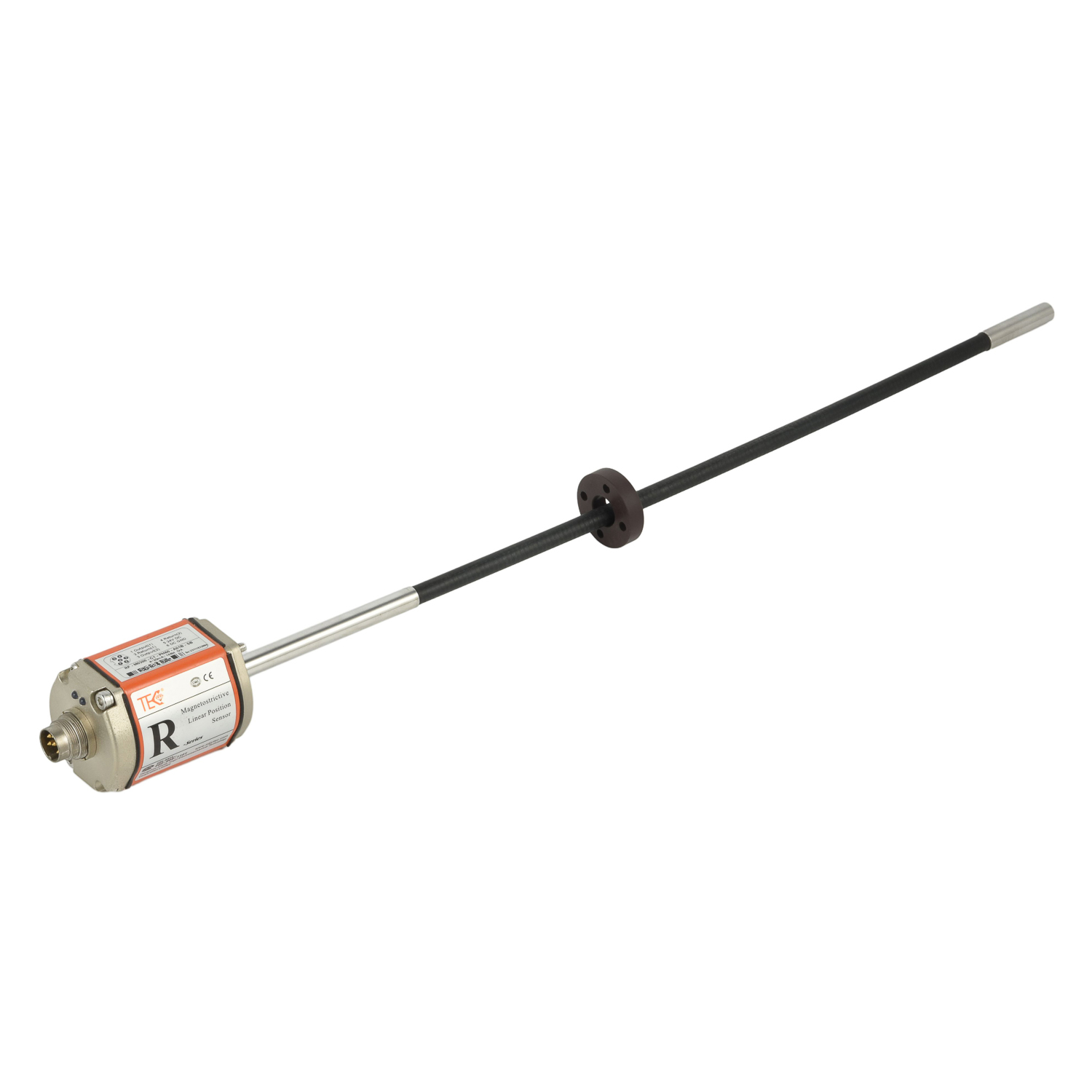
The journey of a magnetostrictive sensor towards reliable data acquisition starts with meticulous installation. Proper mounting is non-negotiable for achieving the high linearity and accuracy these sensors are renowned for. The sensor body must be securely fastened, aligned parallel to the measurement path, and isolated from external stresses or vibrations. Special attention is paid to the positioning of the position magnet, whose movement along the waveguide induces the crucial torsional strain pulse. A flawless installation establishes the foundation for decades of precise operation, making this initial phase critical for system integrity.
The Core of Reliable Operation
At the heart of its operation, a magnetostrictive sensor performs a elegant physical dance. A current pulse sent down the waveguide wire interacts with the magnetic field from the position magnet. This interaction generates a torsional strain wave that travels back to the sensor head at the speed of sound. The electronics module precisely measures the time delay between the pulse initiation and the wave's return. This time-of-flight calculation is directly proportional to the magnet's position, providing continuous, non-contact, and wear-free measurement. This robust principle ensures reliable operation even in demanding environments with temperature fluctuations, pressure variations, or contaminant exposure.
Engineering for Long-Term Longevity
The renowned longevity of magnetostrictive sensors is a product of intentional design. With no mechanical contact between the sensing element and the moving magnet, intrinsic wear is eliminated. The waveguide is typically sealed within a protective stainless steel tube, safeguarding it from moisture, chemicals, and physical damage. High-quality models feature robust electronics designed for industrial temperature ranges and electrical noise immunity. This durable construction, combined with the fundamental wear-free sensing principle, translates to mean time between failures (MTBF) figures often exceeding decades, minimizing downtime and total cost of ownership.
Optimizing Performance Through Calibration and Integration
Post-installation, calibration fine-tunes the sensor to its specific application, setting the zero and span points for maximum accuracy. Seamless integration into control systems is facilitated by standard analog outputs (4-20mA, 0-10V) or digital interfaces like SSI and IO-Link. This integration allows for real-time position feedback critical for process control, safety systems, and predictive maintenance routines. Proper integration ensures the sensor's high-resolution data is effectively utilized, making it a intelligent component within a larger automated ecosystem.
Ensuring Durability with Proactive Maintenance
While famously low-maintenance, proactive care extends a sensor's service life to its full potential. This involves periodic checks of mounting integrity, electrical connections, and cable condition. Monitoring the output signal for stability can provide early warning of potential issues. Keeping the sensing area free from excessive metallic debris and ensuring the position magnet remains securely attached are simple yet effective practices. This preventative approach, often outlined in the manufacturer's guidelines, protects your investment and guarantees sustained measurement fidelity over the long haul.
 YourUltimatePrimeronMagnetostr
TheCoreofInnovation:RecentBrea
DemystifyingLinearity:WhyIt'sC
TheLifecycleStory:Installation
YourUltimatePrimeronMagnetostr
TheCoreofInnovation:RecentBrea
DemystifyingLinearity:WhyIt'sC
TheLifecycleStory:Installation