
Power Plant Bridge Crane Non-contact Magnetostrictive Displacement Sensor Field Application
Bridge cranes in power plants handle heavy components, tools, and maintenance loads in harsh, dusty environments. Reliable positioning is essential for safe travel, hoisting, and precise load placement. Traditional contact sensors often suffer from wear, mechanical binding, and contamination, increasing downtime. Non-contact magnetostrictive displacement sensors provide a robust alternative for field applications.
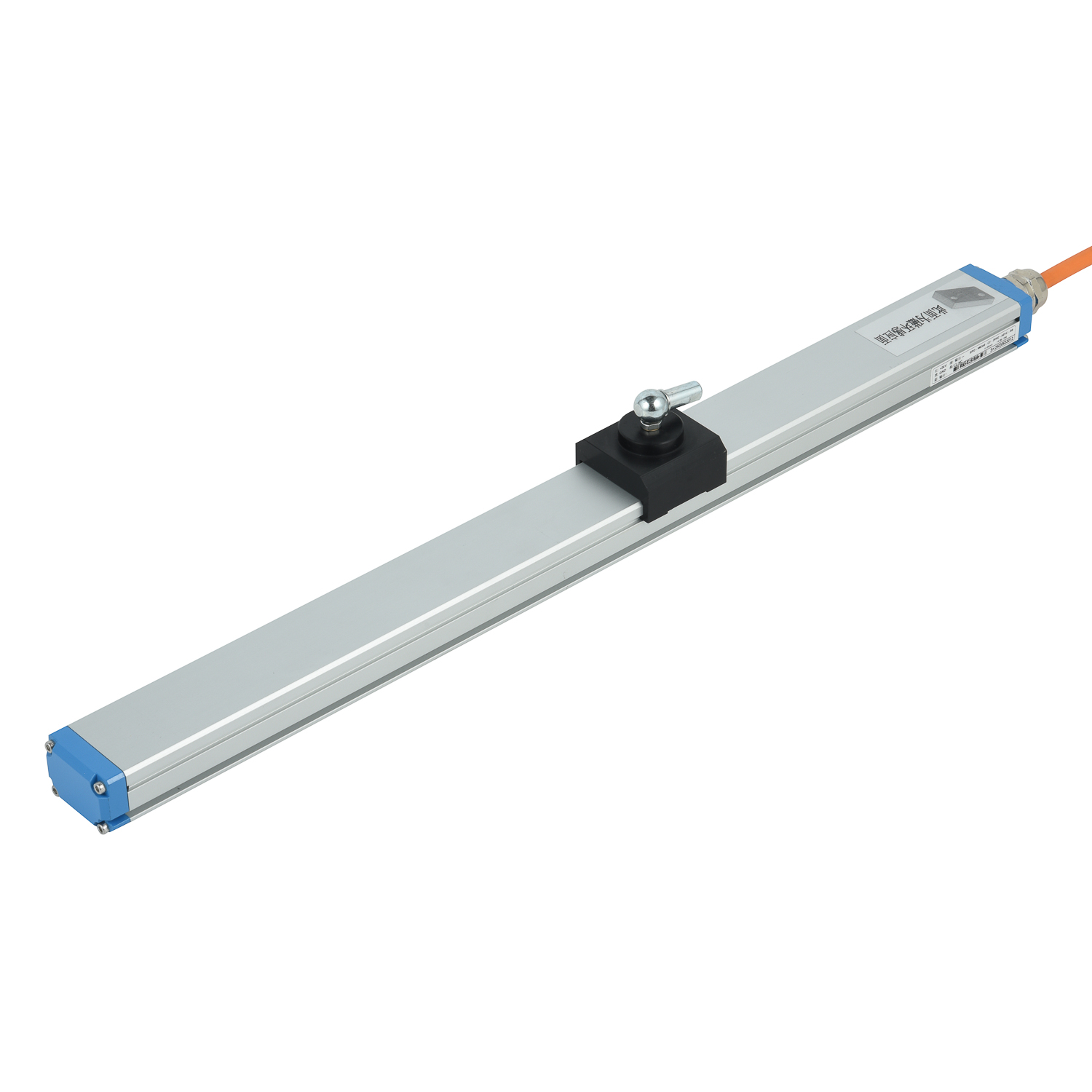
The sensor uses a magnetostrictive waveguide and a movable position magnet. Because there is no mechanical contact between the magnet and the sensing element, wear is minimized and service life is extended. It outputs continuous absolute position data enabling accurate crane trolley positioning. In field installations, the sensor is mounted along the travel path, protected by a stainless steel or aluminum housing. Shielding and proper grounding reduce electromagnetic interference from motors and variable-frequency drives.
At a power plant, the sensor supports anti-sway control, automatic load positioning, and travel limit monitoring. It helps prevent collision with structures and improves maintenance efficiency. During commissioning, engineers verify stroke length, zero point, signal stability, and repeatability under load. Regular inspection of the magnet, cable, and mounting bracket ensures long-term reliability. With high accuracy and low maintenance, non-contact magnetostrictive displacement sensors are well suited to power plant bridge crane field applications.
 Injection Molding Die Casting
 Construction Machinery Crane M
Power Plant Bridge Crane Non-c
 Port Stacker-reclaimer Intrins