
TheCoreofInnovation:RecentBreakthroughsinMagnetostrictiveSensorMaterials
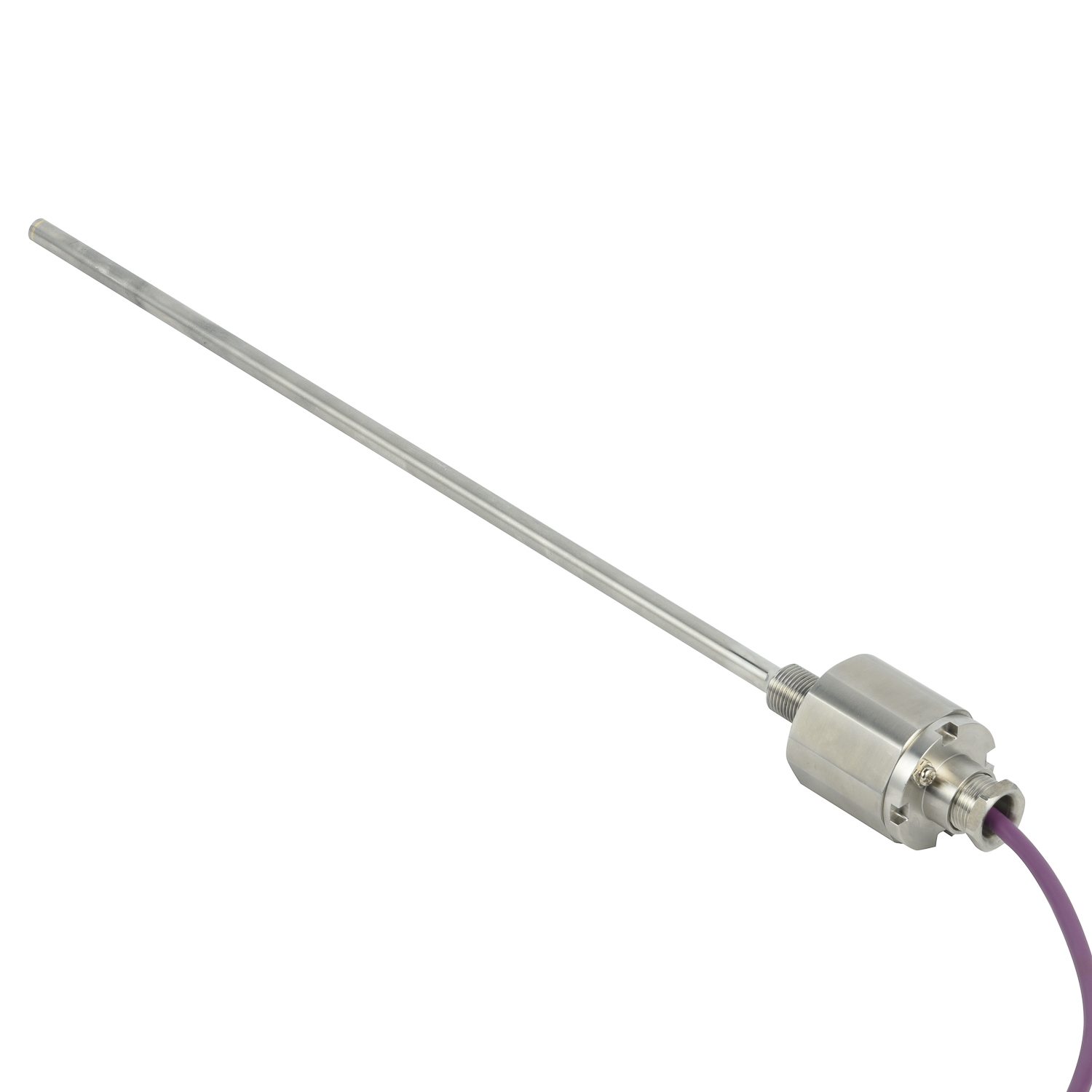
The landscape of sensing technology is undergoing a quiet revolution, driven by advancements at the material level. Magnetostrictive sensors, which convert magnetic energy into mechanical motion or vice versa, are at the forefront. Their performance is intrinsically linked to the core materials used. This article delves into the recent breakthroughs in these specialized materials, exploring how they are pushing the boundaries of precision, efficiency, and application scope.
Advanced Alloys: Redefining Performance Parameters
The quest for superior magnetostrictive materials has led to significant innovation in alloy composition. Traditional materials are being surpassed by next-generation alloys like Terfenol-D (Tb-Dy-Fe) and Galfenol (Fe-Ga). Terfenol-D remains renowned for its giant magnetostriction at room temperature, enabling high-force micro-actuators and sensitive low-frequency sensors. Meanwhile, Galfenol is gaining traction due to its remarkable mechanical robustness and ductility, allowing it to be machined and welded, which opens doors for embedded sensor applications in structural health monitoring where durability is paramount.
Enhancing Sensitivity and Strain Response for Precision Sensing
A primary focus of recent research is amplifying the material's strain response to magnetic fields. Scientists are engineering materials at the nano- and micro-scale to achieve unprecedented sensitivity. By controlling grain orientation, doping with rare-earth elements, and creating laminated composite structures, researchers can tailor the magnetostrictive coefficient. These enhancements directly translate to sensors capable of detecting minute changes in pressure, position, or torque with exceptional accuracy, crucial for applications in aerospace navigation systems and high-precision manufacturing.
Improving Durability and Operational Longevity
Material science breakthroughs are not just about performance peaks but also about reliability. New composite magnetostrictive materials are being designed to withstand extreme environments—including high temperatures, corrosive fluids, and intense mechanical stress. The development of protective coatings and corrosion-resistant alloy variants ensures operational longevity and stable performance over time. This durability is vital for deploying sensors in harsh industrial settings, deep-sea exploration equipment, and downhole drilling tools where maintenance is challenging.
Novel Composite and Hybrid Material Fabrication
The frontier of innovation lies in composite and hybrid materials. Researchers are successfully integrating magnetostrictive particles into polymer matrices or combining them with piezoelectric materials. These composites offer unique benefits, such as mechanical flexibility, reduced eddy current losses, and multifunctional capabilities. For instance, a magnetostrictive-piezoelectric hybrid can simultaneously sense magnetic fields and mechanical vibrations, paving the way for a new generation of multi-modal sensors for smart infrastructure and advanced diagnostics.
Broadening Application Horizons: From Industry to Biomedicine
With these material advancements, the application horizons for magnetostrictive sensors are expanding exponentially. Beyond traditional industrial automation and non-destructive testing, new materials are enabling biocompatible sensors for medical devices. Miniaturized, highly sensitive sensors can be used for precise drug delivery systems, micro-robotic surgery tools, and implantable devices for monitoring internal bodily pressures. This cross-disciplinary leap demonstrates how core material innovation is the true engine driving sensor technology into new and transformative fields.
 YourUltimatePrimeronMagnetostr
TheCoreofInnovation:RecentBrea
DemystifyingLinearity:WhyIt'sC
TheLifecycleStory:Installation
YourUltimatePrimeronMagnetostr
TheCoreofInnovation:RecentBrea
DemystifyingLinearity:WhyIt'sC
TheLifecycleStory:Installation