
FromMicronstoMeters:TheVersatileWorldofMagnetostrictiveDisplacement
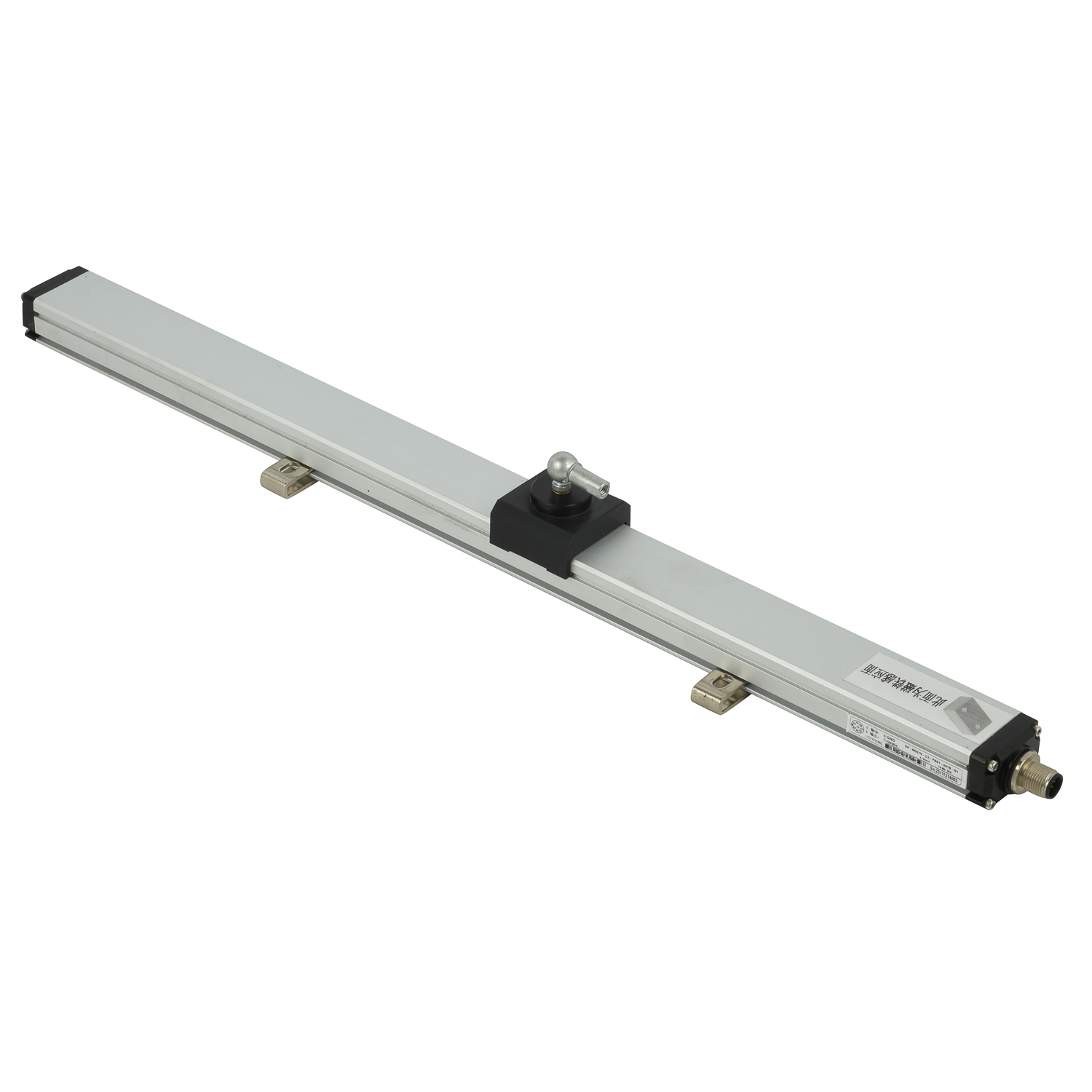
In the realm of precision measurement, where accuracy is paramount, magnetostrictive displacement sensors stand as a cornerstone technology. They masterfully bridge the gap between microscopic detail and macroscopic scale, offering reliable linear position feedback across diverse industries. This article delves into the versatile world of these sensors, unraveling their operation, applications, and distinct advantages.
The Core Principle: How Magnetostriction Transduces Position
At the heart of this technology lies the magnetostrictive effect. A sensor typically consists of a waveguide made from a ferromagnetic material and a movable position magnet. When an interrogation current pulse is sent down the waveguide, it generates a circumferential magnetic field. The position magnet's field interacts with this pulse at its location, creating a torsional strain wave (or "Wiedemann effect") that travels back along the waveguide at ultrasonic speed. The precise time interval between the current pulse initiation and the detection of the returning strain wave is directly proportional to the magnet's position, enabling exact distance calculation.
A Spectrum of Applications: From Machine Tools to Hydraulic Cylinders
The versatility of magnetostrictive sensors is showcased in their wide application range. In industrial automation, they provide critical feedback for hydraulic cylinder piston position, injection molding machines, and press controls. They enable precision in semiconductor manufacturing equipment and coordinate measuring machines (CMMs). Furthermore, they are indispensable in heavy industries like steel mills for roll gap positioning and in renewable energy systems for pitch control on wind turbines. Their ability to provide absolute position data without wear makes them ideal for these demanding environments.
Key Advantages Over Competing Technologies
What sets magnetostrictive displacement sensors apart? First, they offer non-contact measurement between the sensing element and the position magnet, eliminating mechanical wear and ensuring long-term reliability. They provide absolute position output upon power-up, eliminating the need for homing routines. Their design allows for high accuracy and repeatability, often within microns, even over stroke lengths of several meters. They are also robust, resistant to shock, vibration, and contamination, making them suitable for harsh industrial settings where LVDTs or potentiometric sensors might fail.
Critical Selection Criteria: Resolution, Stroke, and Output
Selecting the right sensor requires careful consideration. Stroke length is fundamental, ranging from millimeters to over ten meters. Resolution determines the smallest detectable position change, crucial for high-precision tasks. The output signal type—analog (4-20 mA, 0-10 V) or digital (SSI, CANopen, Profibus)—must integrate with the existing control system. Environmental factors like operating temperature, pressure ratings (for rod-style sensors in cylinders), and housing material (e.g., stainless steel for corrosive settings) are equally vital for optimal performance and longevity.
The Future of Precision Measurement
As industries push for greater efficiency, intelligence, and precision, magnetostrictive displacement technology continues to evolve. Integration with Industrial IoT (IIoT) for predictive maintenance, enhanced materials for extreme environments, and miniaturization for compact machinery are key trends. By seamlessly measuring from microns to meters with unwavering reliability, magnetostrictive sensors will remain a pivotal solution, driving innovation and precision in the automated world of tomorrow.
 Graybus Cable Fault
 Field Application of Graybus C
 Model and Specification of Gra
 Import Substitute Graybus Cabl