
How Accurate are Magnetostrictive Displacement Sensors?
How Accurate are Magnetostrictive Displacement Sensors?
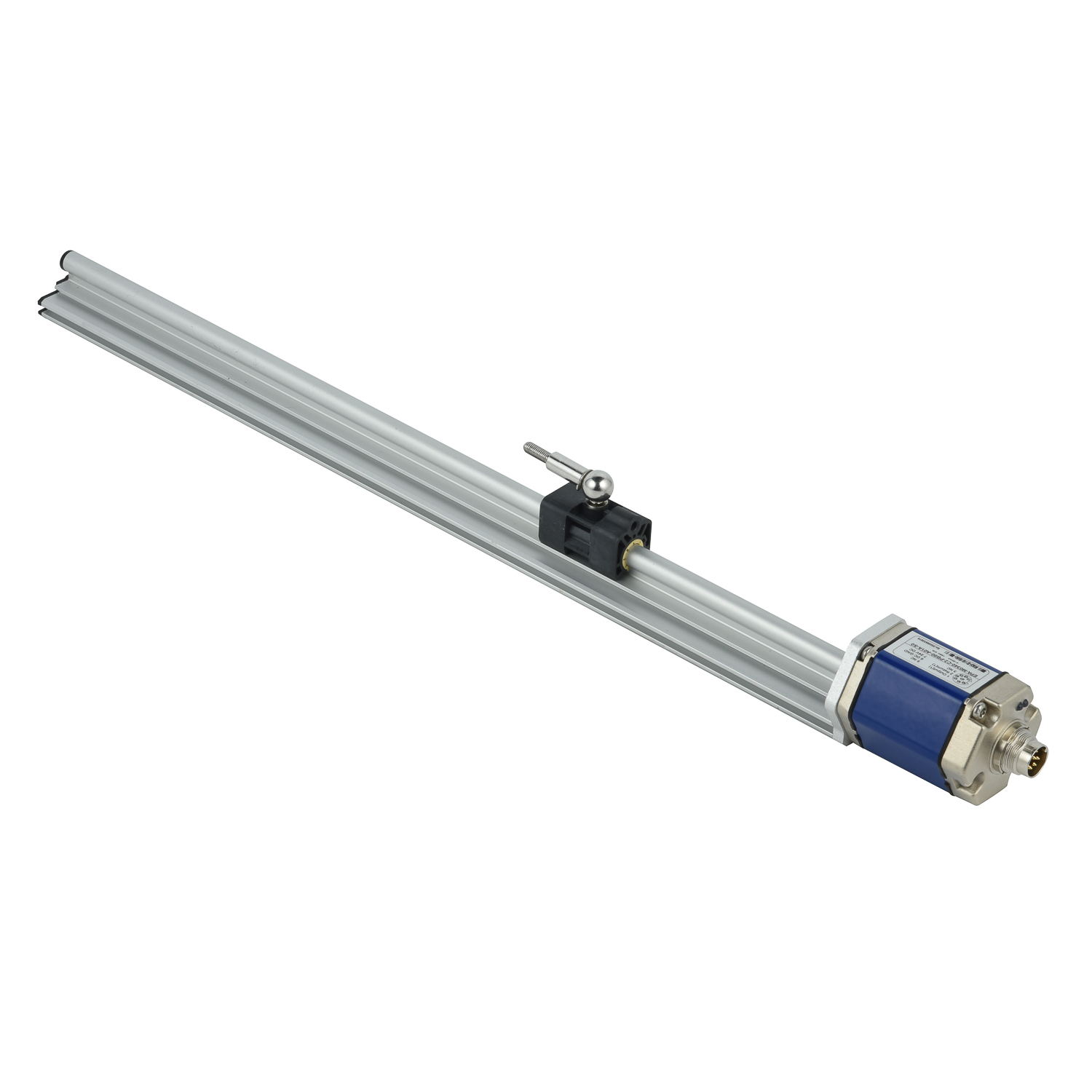
Magnetostrictive displacement sensors have gained significant popularity in various industrial applications due to their remarkable accuracy and reliability. These sensors operate on the principle of magnetostriction, a phenomenon where certain magnetic materials exhibit changes in shape under the influence of a magnetic field.
The core of a magnetostrictive displacement sensor comprises a magnetic material, often a nickel-iron alloy, and a measuring rod. One end of the rod is fixed to the object whose displacement is to be measured, while the other end interfaces with the magnetic material. As the object moves, the rod undergoes a corresponding linear or rotational displacement, altering the internal magnetic field distribution within the magnetic material.
The precision of these sensors lies in their ability to detect even minute changes in the magnetic field. By carefully monitoring these changes, the sensor can accurately determine the extent of displacement. The resulting signal is then processed by advanced circuitry to convert it into a proportional electrical output.
The accuracy of magnetostrictive displacement sensors varies depending on the specific model and application. However, most modern sensors offer remarkable precision, often within the range of 0.01% to ±0.05% of full scale. This level of accuracy, coupled with their high resolution and fast response time, makes them ideal for demanding applications such as automation, robotics, aerospace, and oil and gas pipeline monitoring.
In conclusion, magnetostrictive displacement sensors provide an accurate and reliable means of measuring displacement in a wide range of industrial settings. Their precision, combined with their durability and versatility, ensures that they remain a valuable tool in the toolbox of modern engineers and technicians.
 Grain and Oil Storage Tank Rad
 Power Plant Non-contact Radar
 Port Intrinsically Safe Explos
 Water Conservancy Corrosion-re