
High-temperature Electromagnetic Ultrasonic Thickness Probe
High-temperature electromagnetic ultrasonic thickness probes (EMAT probes) measure wall thickness without couplant and without direct contact. They generate and detect ultrasonic waves directly in conductive or magnetic materials using electromagnetic fields. Because no liquid couplant is needed, they operate on hot surfaces where conventional piezoelectric probes fail.
These probes are widely used in steel mills, power plants, refineries, and pipeline inspection. They monitor pipe walls, boiler tubes, pressure vessels, and hot rolled plates during production or maintenance. A typical system includes a high-temperature coil, a magnet, cooling protection, and signal processing electronics.
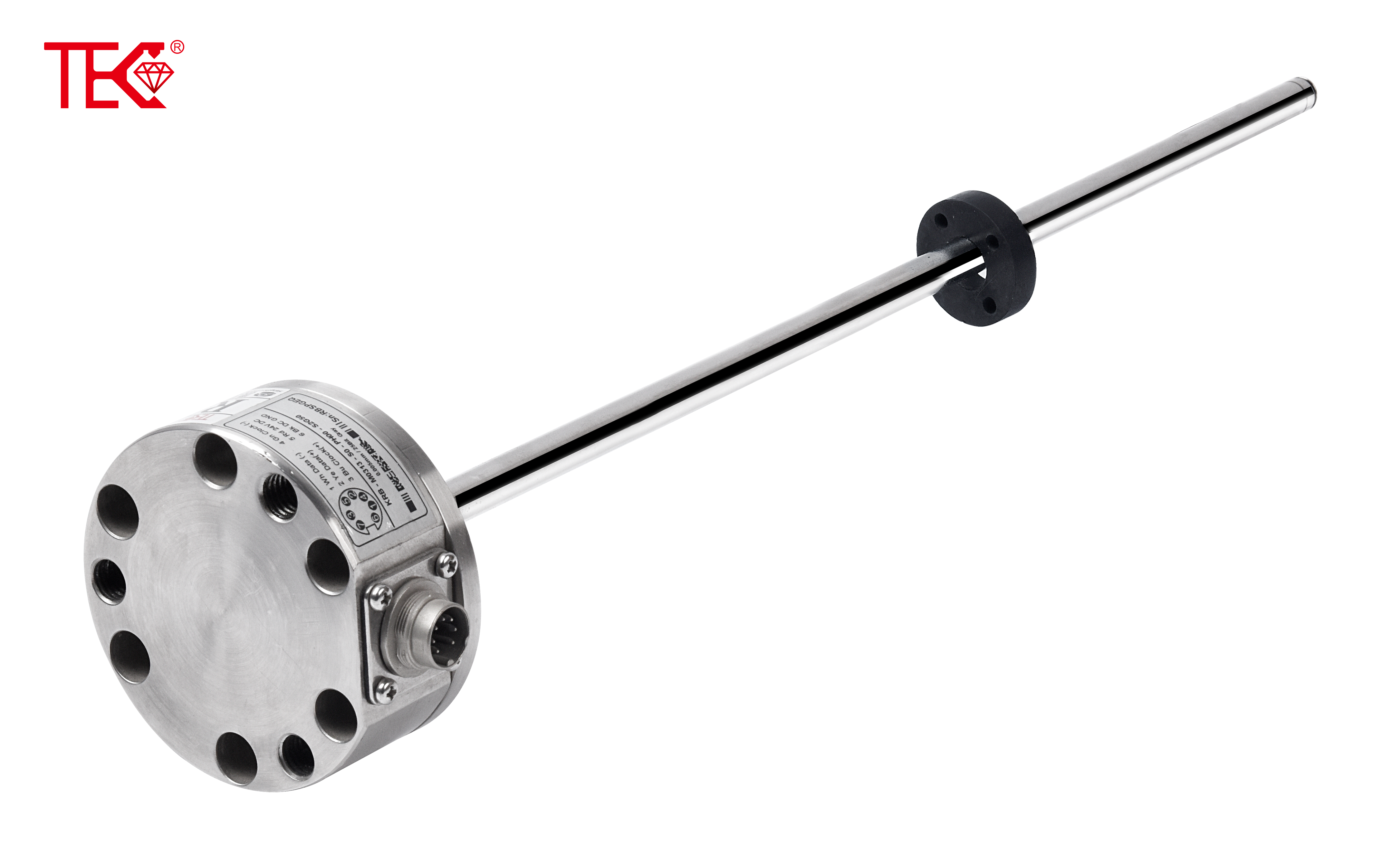
The main advantage is non-contact measurement at temperatures from 200°C to over 800°C, depending on design. EMAT probes can excite shear horizontal waves or Lamb waves, making them useful for rough, scaled, or oxidized surfaces. They also reduce downtime because inspection can happen while equipment is hot.
Challenges include lower signal-to-noise ratio, lift-off sensitivity, and thermal drift. To improve performance, manufacturers use optimized coil geometry, heat-resistant materials, pulsed magnets, and advanced filtering. Regular calibration with reference blocks helps maintain accuracy.
When selecting a high-temperature EMAT probe, consider temperature range, material, thickness, size, cooling, and cable length. These probes enable safer, faster thickness monitoring in extreme industrial environments.
 Installation Method of Built-i
 Working Principle of High-pres
 Technical Parameters of High-t
 Waterproof LVDT Displacement S