
Rod-type Magnetostrictive Displacement Sensor
Rod-type magnetostrictive displacement sensors are high-precision linear position sensors used in industrial automation and hydraulic systems. They measure absolute position without contact between the moving magnet and the sensing rod, which improves durability and reduces wear. The core component is a magnetostrictive waveguide, usually a thin metal rod made of special alloy. When a current pulse travels along the waveguide, it interacts with the magnetic field of a position magnet. This interaction creates a torsional strain wave, or mechanical pulse, that propagates back to a sensing element at one end of the rod. By measuring the time between the current pulse and the returning strain wave, the sensor calculates the magnet position with high accuracy.
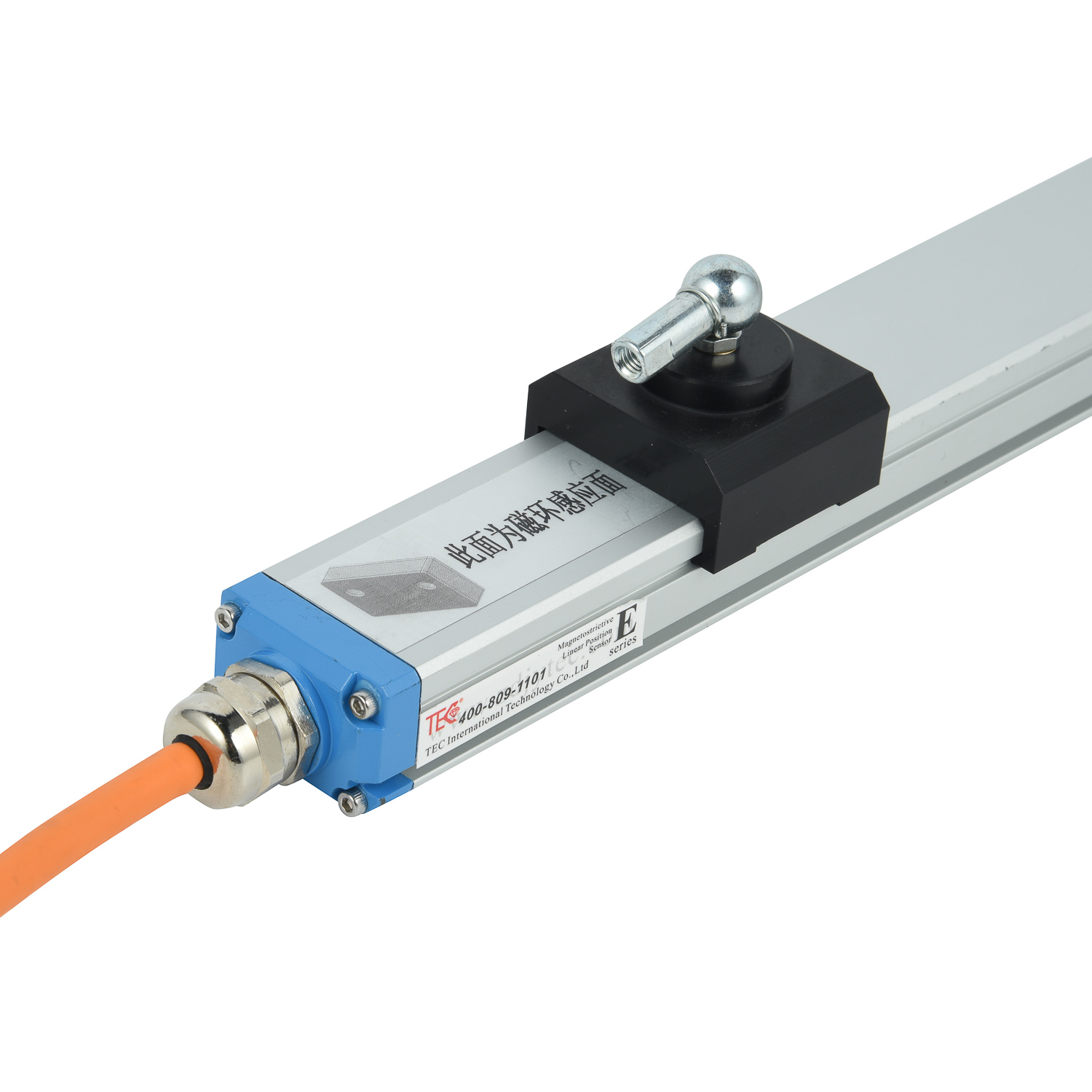
Rod-type magnetostrictive sensors offer many advantages. They provide absolute position output, so no re-zeroing is required after power loss. They have excellent repeatability, long life, and resistance to shock, vibration, and contamination. Because the magnet does not touch the rod, there is no mechanical wear. These sensors can operate in harsh environments and are available with analog, SSI, CANopen, Profibus, EtherCAT, and other outputs. Their measuring ranges span from 50 mm to several meters, with linearity up to ±0.01% FS and resolution in micrometers.
Typical uses include hydraulic cylinders, injection molding, steel mills, wind turbines, and test rigs. Proper alignment, rod protection, and shielding ensure stable signals and long service life.
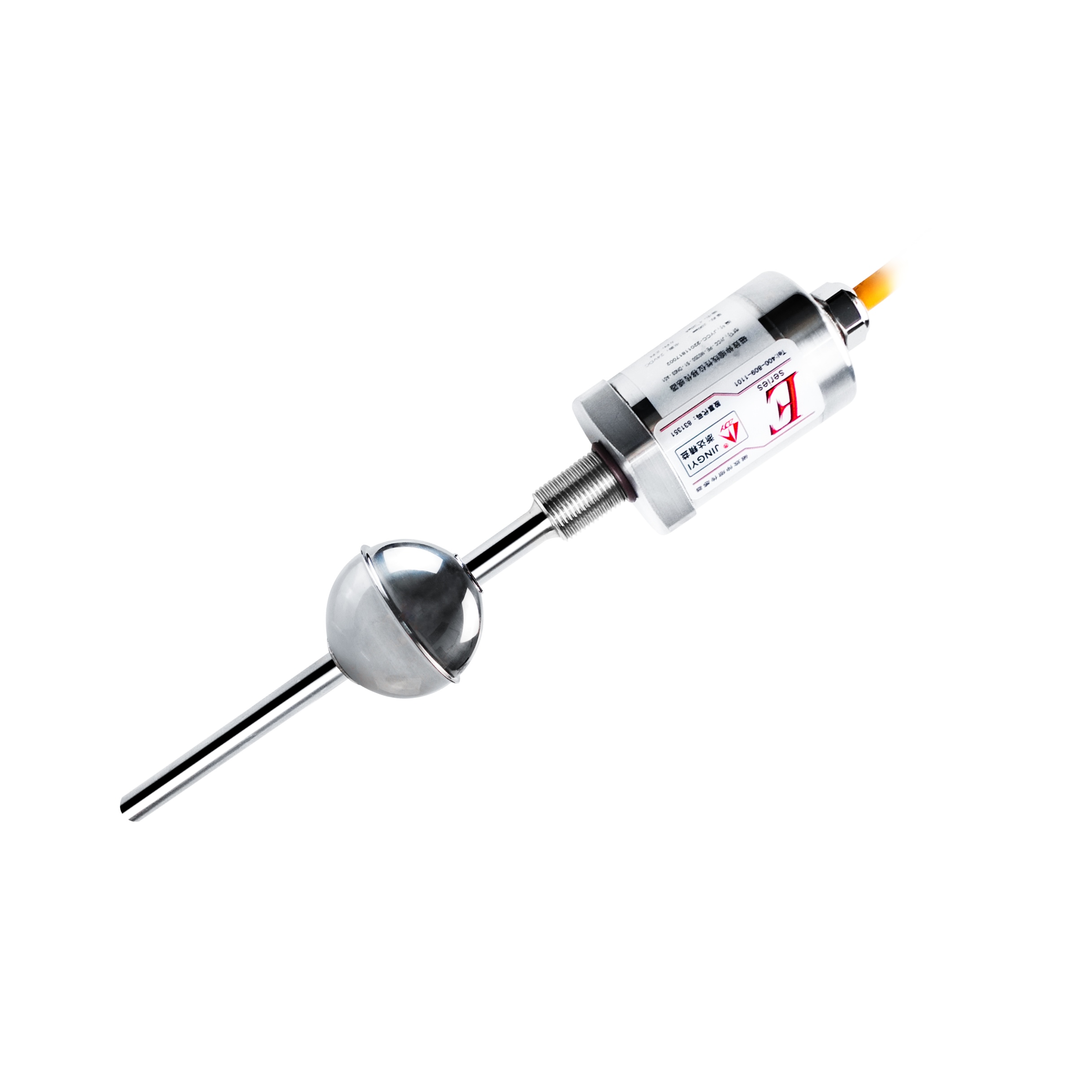 Corrosion-resistant Magnetostr
Rod-type Magnetostrictive Disp
Corrosion-resistant Magnetostr
Rod-type Magnetostrictive Disp
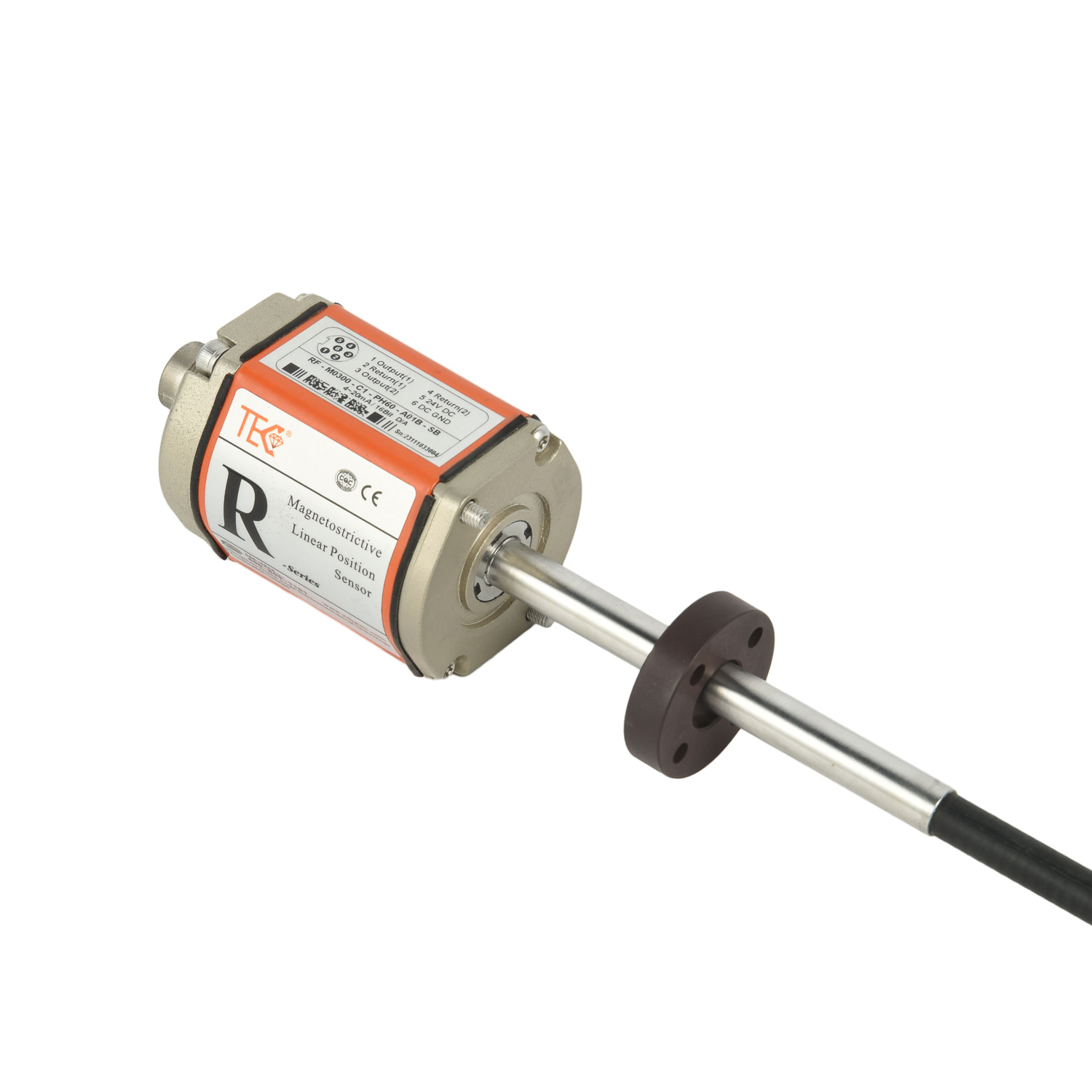 Flange-mounted Magnetostrictiv
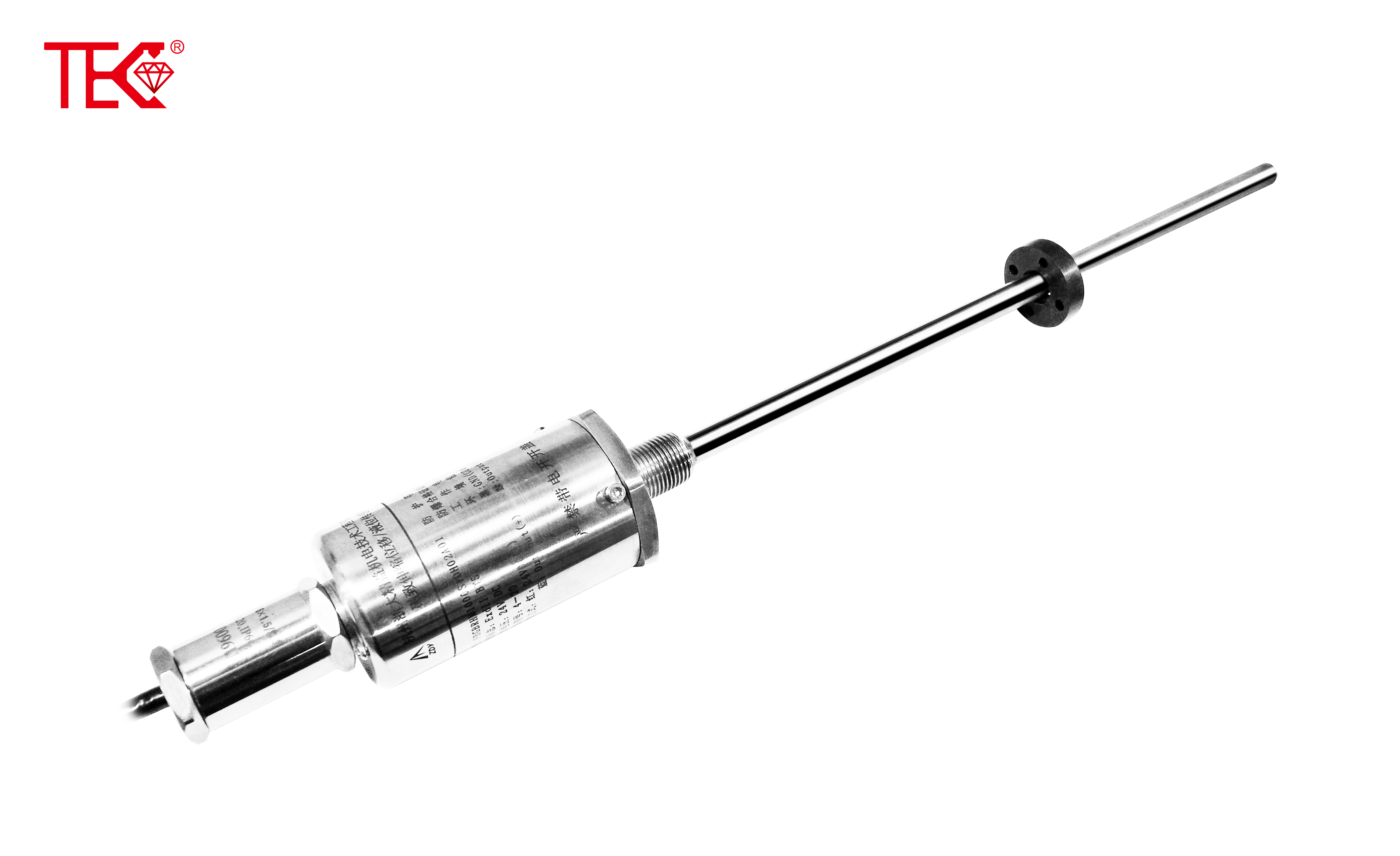 Non-contact Magnetostrictive D