
TheAnalogvs.DigitalDebateinMagnetostrictiveSensorOutputs
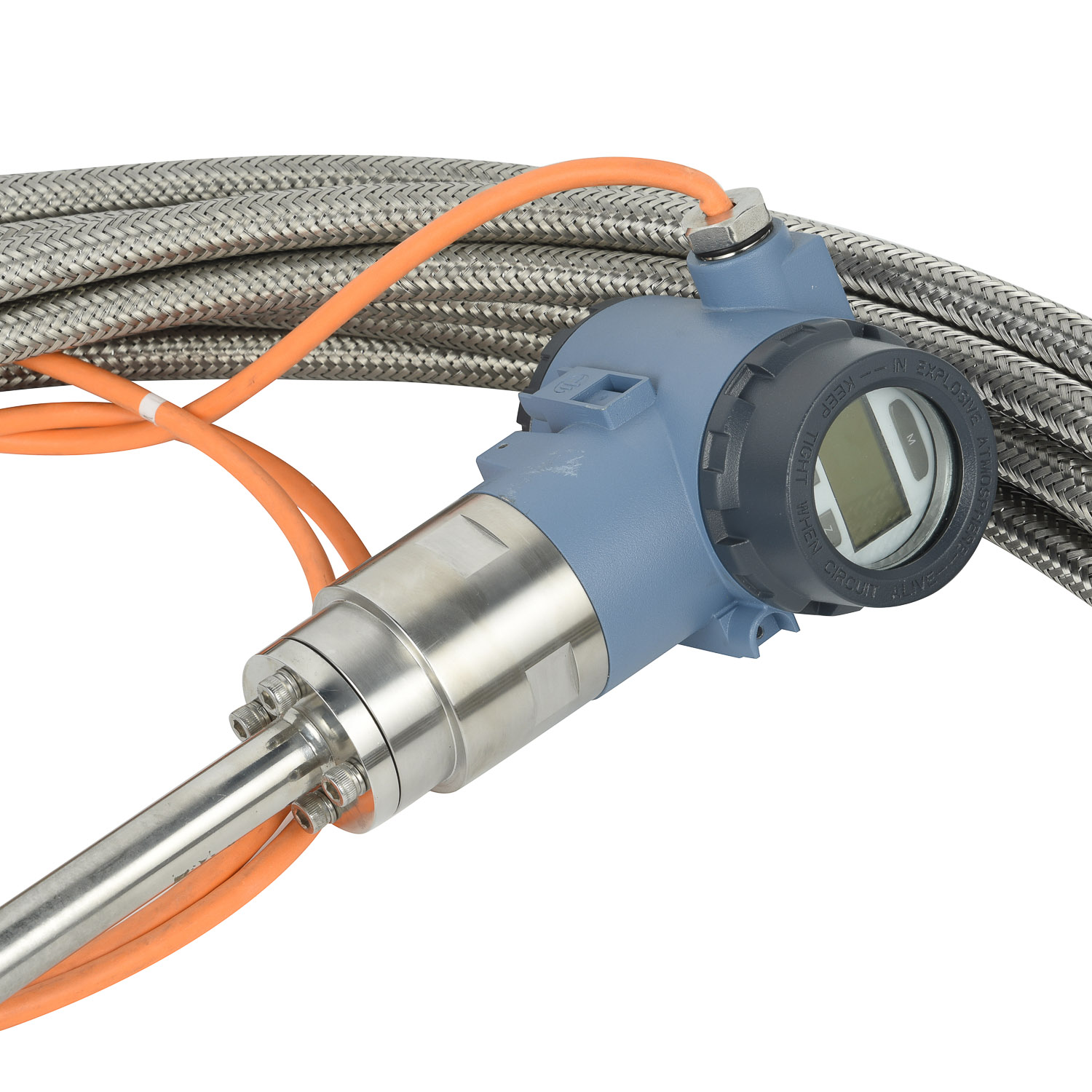
The core function of a magnetostrictive position sensor is precise and reliable measurement. However, the journey from detecting the position of a magnetic marker to delivering that data to a control system involves a crucial decision: analog or digital output. This choice fundamentally shapes the sensor's performance, integration complexity, and suitability for specific applications, sparking an ongoing debate among engineers and system designers.
Understanding the Core Signal: The Magnetostrictive Principle
At its heart, a magnetostrictive sensor operates on a physical phenomenon. A current pulse sent down a waveguide interacts with the magnetic field from a position magnet. This interaction generates a torsional strain wave that travels back to a pickup element. The time-of-flight of this wave is directly proportional to the magnet's position. This initial detection yields a precise time-based analog signal, which forms the raw data for all subsequent output formats.
The Case for Analog Output: Simplicity and Continuous Resolution
Analog outputs, typically 4-20 mA or 0-10 V, provide a continuous, proportional representation of the measured position. Their primary advantage lies in simplicity and direct compatibility with legacy PLCs and analog input modules. The signal is a direct, unbroken stream, offering theoretically infinite resolution within its range. This makes analog sensors seemingly straightforward for basic monitoring and control tasks where a continuous voltage or current loop is the system's native language.
The Digital Output Advantage: Noise Immunity and Data Integrity
Digital outputs, such as SSI, IO-Link, or various fieldbus protocols, transmit position data as discrete binary packets. This format provides formidable noise immunity, as the signal is less susceptible to degradation from electromagnetic interference (EMI) over long cable runs. Digital communication allows for the transmission of not just position, but also diagnostic data (health status, temperature, etc.), enabling predictive maintenance and smarter system integration. The data is precise, unambiguous, and ready for direct use in modern digital control architectures.
Critical Comparison: Accuracy, Speed, and System Integration
When comparing accuracy, digital outputs often hold an edge as they eliminate analog-to-digital conversion errors at the controller side. The stated resolution is guaranteed at the point of data transfer. In terms of update speed, high-speed analog systems can be fast, but digital protocols like SSI offer consistently high and deterministic sampling rates. For system integration, digital outputs streamline wiring (especially with multi-drop networks) and simplify configuration through parameterization, though they may require more specialized knowledge to implement initially.
Application-Based Selection: Matching Output to Operational Needs
The choice is not about which is universally better, but which is optimal for the application. Rugged, long-distance installations in electrically noisy environments (e.g., steel mills, heavy machinery) strongly favor robust digital interfaces. For simple replacement of old potentiometers or connection to basic controllers, an analog output may be the most cost-effective and seamless solution. The decision matrix must weigh factors like noise environment, data complexity needs, existing infrastructure, and total cost of ownership.
The Future Trajectory: Smart Sensors and Networked Systems
The trend is decisively moving toward digital and networked solutions. The rise of Industry 4.0 and IIoT demands sensors that are data-rich communication nodes, not just signal providers. Future magnetostrictive sensors will increasingly feature embedded intelligence and standard industrial Ethernet outputs, making the digital debate less about "if" and more about "which protocol." However, analog outputs will remain relevant for their simplicity in less complex applications, ensuring both technologies coexist in the industrial landscape for the foreseeable future.
 Graybus Cable Fault
 Field Application of Graybus C
 Model and Specification of Gra
 Import Substitute Graybus Cabl