
MaterialMatters:HowWaveguideDesignImpactsMagnetostrictiveSensorPerformance
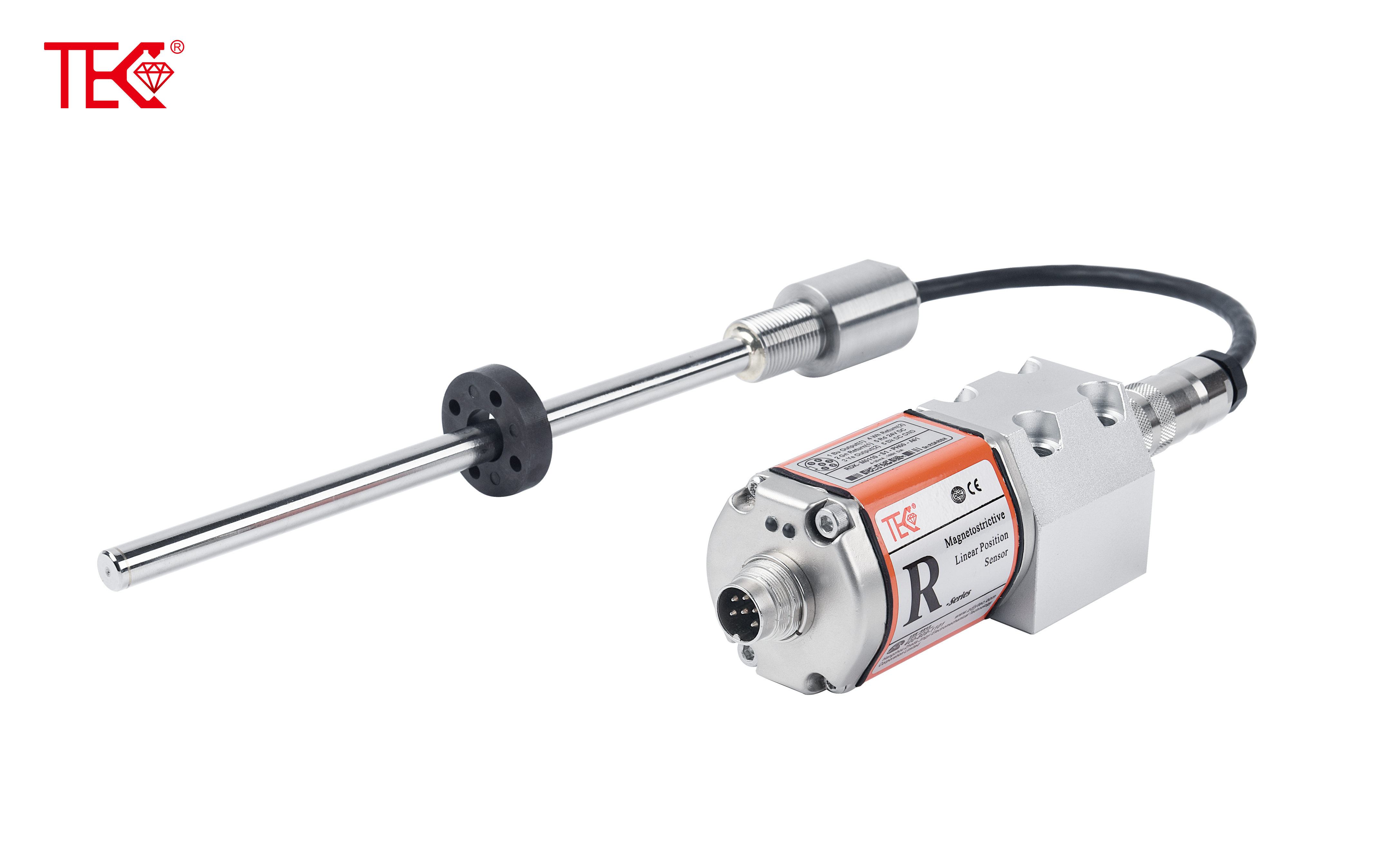
The core functionality of a magnetostrictive sensor hinges on the precise detection of a torsional strain wave. This wave's journey—from its generation at the point of magnetic interaction to its conversion into an electrical signal by the pickup coil—is governed entirely by the waveguide. Far from being a simple mechanical conduit, the waveguide's material and architectural design are paramount determinants of the sensor's ultimate accuracy, resolution, and operational bandwidth.
The Fundamental Role of the Waveguide in Signal Fidelity
Acting as the transmission medium for the acoustic strain wave, the waveguide's primary function is to deliver the signal with minimal distortion and energy loss. The choice of material directly influences the wave's velocity, attenuation, and mode purity. Inadequate design introduces signal dispersion, where different frequency components travel at varying speeds, smearing the temporal pulse and severely degrading measurement resolution and linearity.
Core Material Properties: Attenuation and Velocity
Two material parameters are critical: acoustic attenuation and wave velocity. Low acoustic attenuation is essential for maintaining signal strength over the waveguide's length, enabling longer sensing ranges without excessive amplification that introduces noise. The material's intrinsic damping characteristics dictate this loss. Simultaneously, the acoustic velocity, a fixed property of the waveguide material, sets the fundamental scaling between time-of-flight and measured position, making its stability with temperature and stress a direct driver of sensor accuracy.
Waveguide Geometry: Shaping the Acoustic Path
The physical dimensions—primarily diameter and cross-sectional shape—profoundly impact performance. The diameter influences the guidance of the desired torsional wave mode and suppresses unwanted extensional or flexural modes that create noise. An optimized geometry ensures a clean, dominant torsional mode, leading to a sharper and more detectable signal peak at the receiver. Furthermore, surface finish and straightness are crucial, as irregularities cause scattering and reflections that attenuate and distort the primary signal.
The Critical Interface: Acoustic Coupling and Damping
The termination of the waveguide is not merely an end point; it is a designed acoustic boundary. Effective coupling and damping at the ends are necessary to absorb the strain wave energy after detection. Poorly managed terminations result in signal reflections traveling back along the waveguide. These echoes interfere with subsequent primary pulses, causing positional ambiguity and measurement errors, particularly in high-speed or high-precision applications.
Advanced Design: Tapered and Composite Waveguides
To push performance boundaries, advanced designs employ non-uniform geometries. A tapered waveguide, for instance, can mechanically amplify the strain at the pickup location, enhancing signal-to-noise ratio for weak magnetic inputs. Similarly, composite waveguides utilize sections of different materials or coatings to engineer specific properties—such as reducing velocity for higher time-based resolution or adding clad layers to suppress specific wave modes and further isolate the pure torsional signal.
Conclusion: An Integrated System View
Ultimately, the waveguide cannot be an afterthought. Its design—encompassing material selection, geometric precision, and acoustic termination—is a systems-level engineering challenge that is integral to the sensor's specification. A holistic design approach that co-optimizes the waveguide with the magnetic circuit and detection electronics is essential for unlocking the highest levels of magnetostrictive sensor performance, stability, and reliability in demanding industrial environments.
 Graybus Cable Fault
 Field Application of Graybus C
 Model and Specification of Gra
 Import Substitute Graybus Cabl