
Working Principle of High-pressure Magnetostrictive Level Gauge
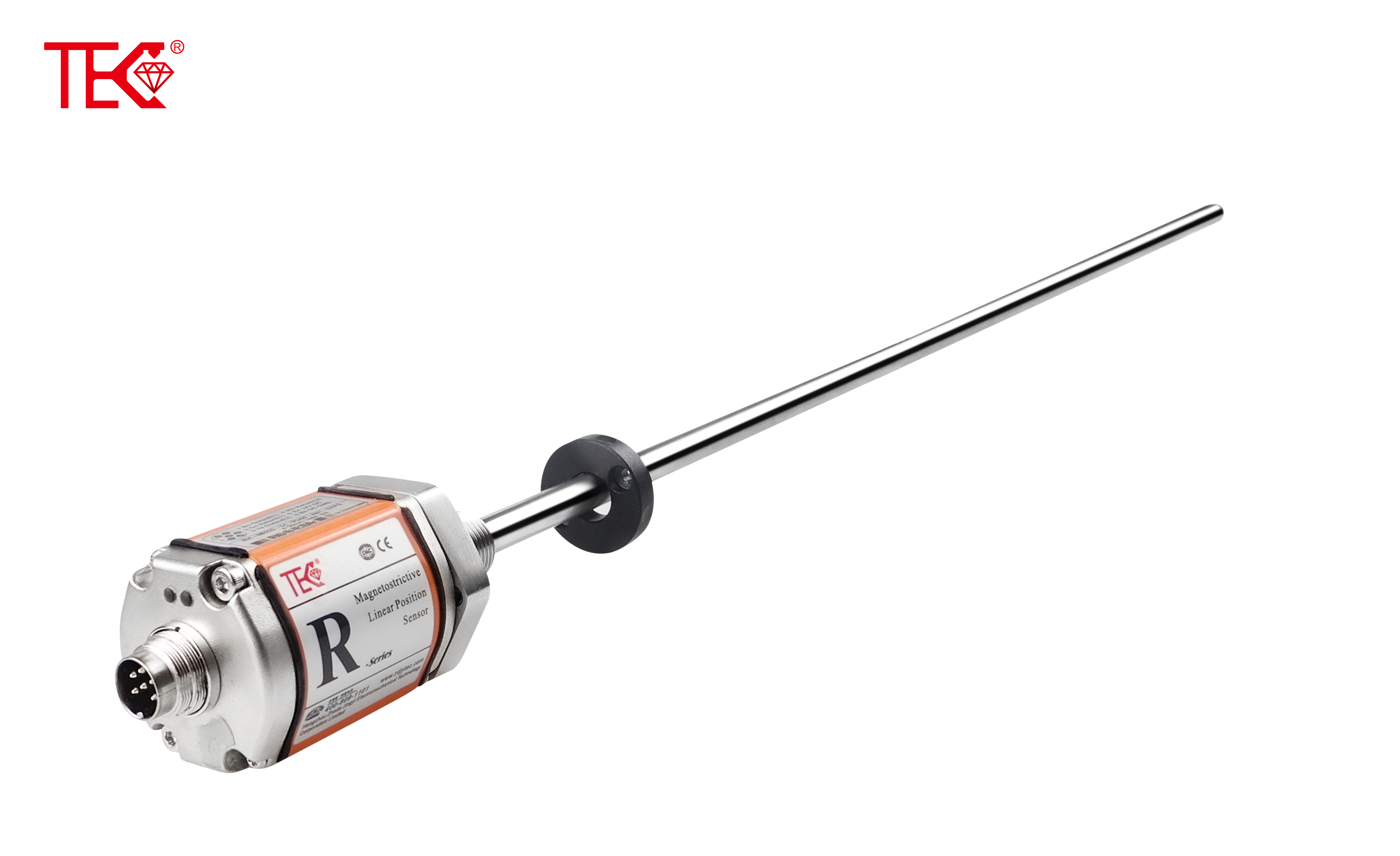
A high-pressure magnetostrictive level gauge measures liquid level by using the magnetostrictive effect inside a sealed, pressure-resistant sensing tube. The gauge typically consists of a waveguide, a magnetic float, a pulse generator, a pickup sensor, and signal-processing electronics. The float contains permanent magnets and moves with the liquid surface inside a high-pressure vessel.
During operation, the electronics sends a short current pulse down the magnetostrictive waveguide. This pulse creates a circular magnetic field around the wire. At the float position, the permanent magnets produce an axial magnetic field. The two fields interact and generate a torsional strain wave, or mechanical pulse, at that point. This wave travels along the waveguide to a pickup device at the top of the sensor and is converted into an electrical signal.
The time between the current pulse and the received strain wave is proportional to the distance from the pickup to the float. The electronics calculates this time-of-flight and converts it into an accurate level value. High-pressure models use a thick-walled tube, strong flange connections, and sealed wetted parts to isolate the sensing element from the process pressure. Because the float is the only moving part and the electronics remain outside the pressure boundary, the gauge offers stable measurement, good repeatability, and long service life in high-pressure tanks and process vessels. It is widely used in chemical, petroleum, and power industries.
 Water Conservancy Rod-type Mag
 Sewage Treatment Flange-mounte
 Grain and Oil Storage Tank Flo
 Port Corrosion-resistant Magne