
Technical Parameters of Magnetostrictive Level Gauge
A magnetostrictive level gauge measures liquid level by detecting the position of a magnetic float. Its performance depends on several technical parameters. Understanding these values helps engineers select the right instrument for tanks.
Measuring range is the distance from the probe bottom to the top flange. Common ranges are 300 mm to 6000 mm, with longer probes available. Resolution is often 0.1 mm or 1 mm. Accuracy is typically +/-0.5 mm or +/-0.05% of full scale. Repeatability is usually +/-0.1 mm or better.
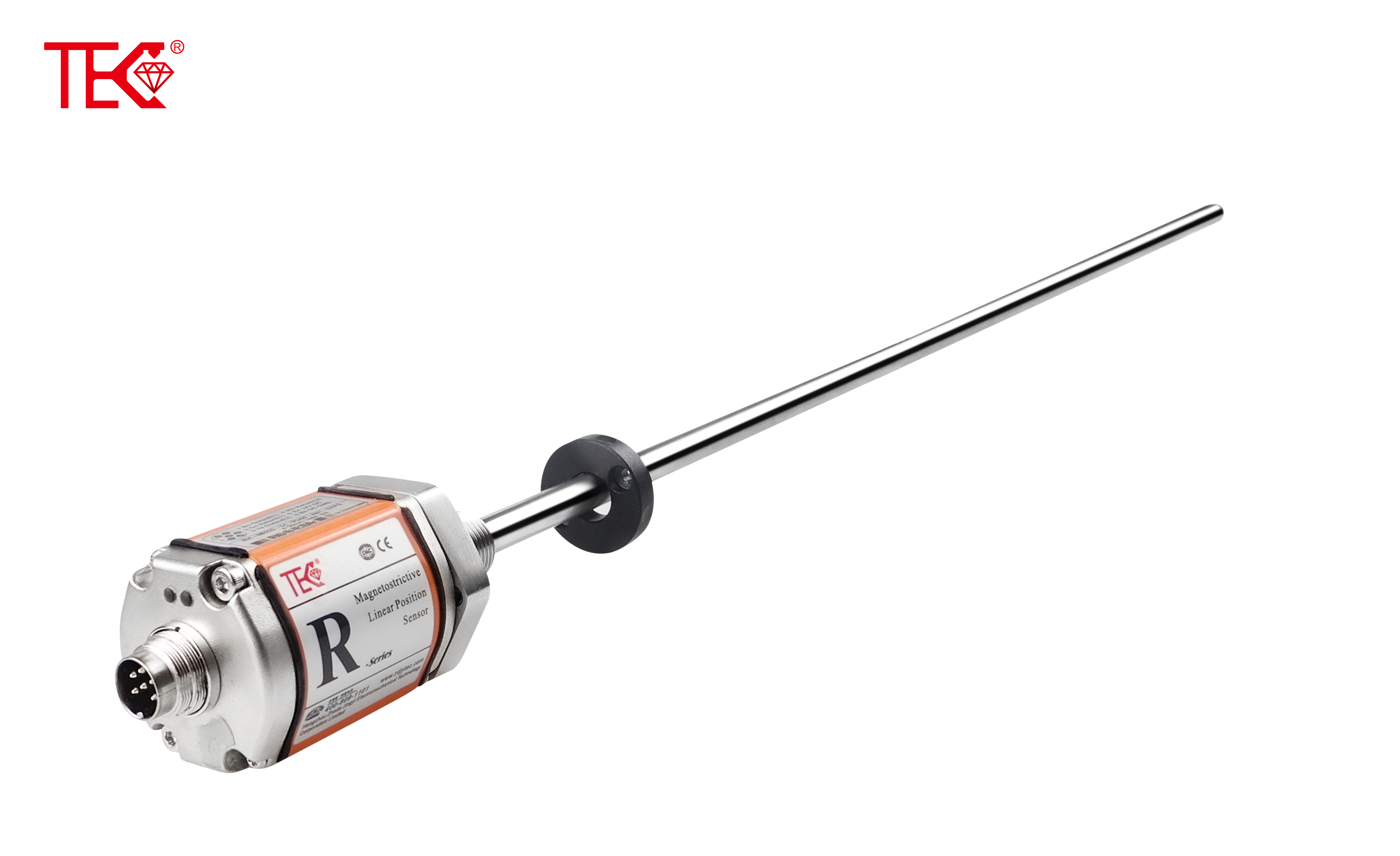
Supply voltage is commonly 24 VDC or 12-36 VDC. Outputs include 4-20 mA, HART, Modbus, and Profibus. Power consumption is low, below 1 W. Cycle time is 10-100 ms.
Process temperature ranges from -40 C to 150 C; high-temperature models reach 300 C. Pressure can reach 10 MPa, depending on flange and stem. Process connections include G1/2, G3/4, NPT, and DN50 flanges. Wetted parts are 304/316L stainless steel, with PTFE insulation for corrosive media.
Protection class is IP65, IP67, or IP68. Explosion ratings include Exia IIC T6 and Exd IIC T6. Float material and density affect compatibility. Minimum density can be 0.5 g/cm3, and viscosity should be below 500 cSt. Dead zones at top and bottom affect installation.
Digital display and remote calibration are common. Proper grounding and shielding improve EMC performance. Choose range, accuracy, output, temperature, pressure, and material to match the application. This ensures reliable level measurement and long service life.
 Working Principle of Magnetost
Technical Parameters of Magnet
Working Principle of Magnetost
Technical Parameters of Magnet
 How Much is Magnetostrictive L
 Magnetostrictive Level Gauge P