
How do magnetostrictive sensors cope with strong electromagnetic interference?
In industrial environments filled with powerful motors, variable frequency drives, and wireless equipment, electromagnetic interference (EMI) poses a significant threat to measurement accuracy. Magnetostrictive sensors, prized for their high precision in position and level sensing, must employ sophisticated strategies to maintain reliability amidst this electrical noise. Their ability to function accurately in electromagnetically hostile conditions is not accidental but the result of deliberate engineering solutions.
Advanced Shielding and Material Selection
The first line of defense for a magnetostrictive sensor against EMI is robust physical shielding. Manufacturers typically encase the critical sensing element, the magnetostrictive waveguide, within a dedicated metallic shield. This shield, often made from materials like mu-metal or specialized steel alloys, acts as a Faraday cage, diverting electromagnetic waves around the sensitive interior rather than allowing them to penetrate. The effectiveness of this shielding is paramount; even small gaps or poor electrical continuity can compromise its performance, allowing disruptive noise to infiltrate the system and corrupt the sensor's output signal.
Sophisticated Signal Processing Techniques
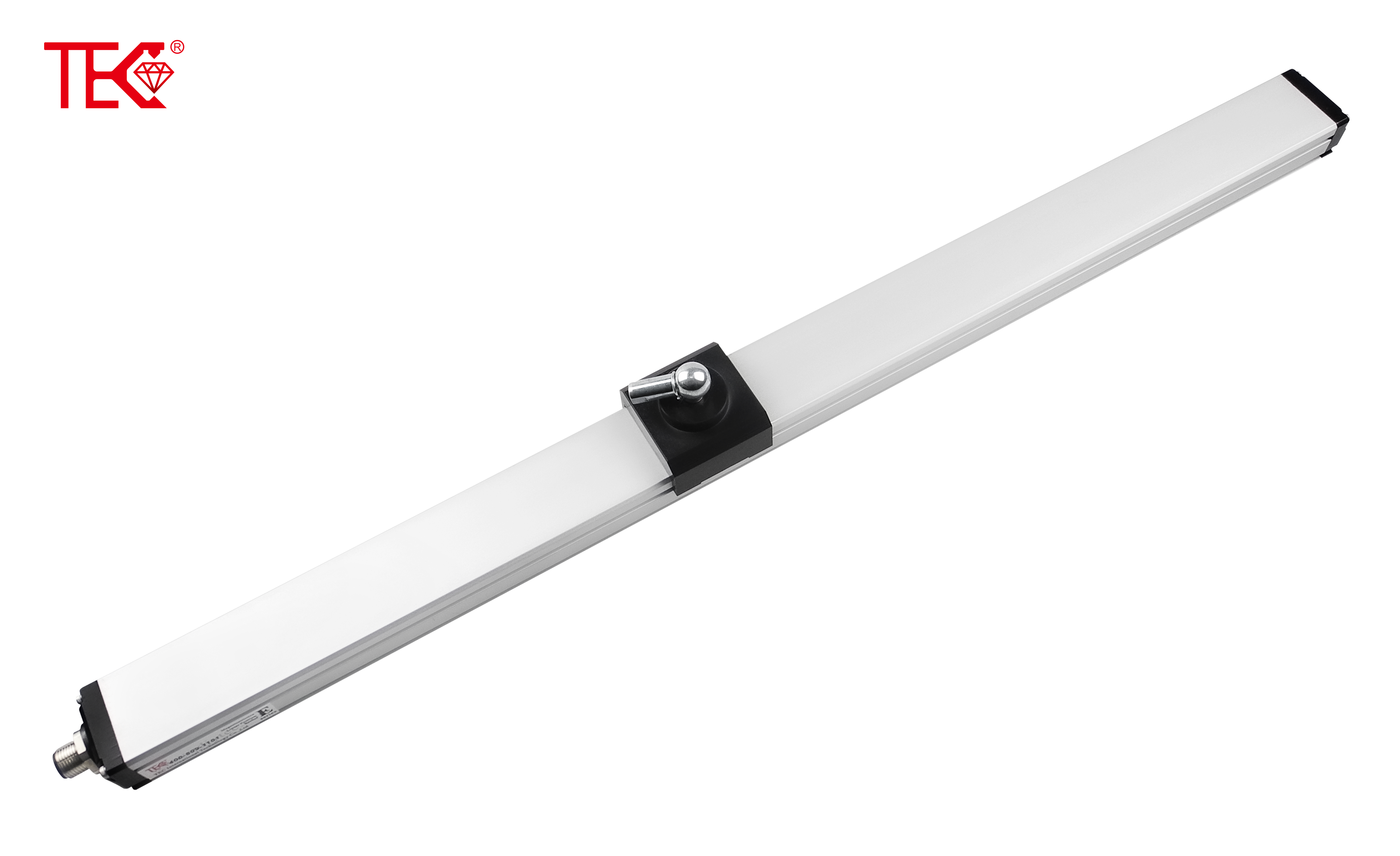
Beyond physical barriers, magnetostrictive sensors leverage intelligent signal processing to distinguish the true measurement signal from background noise. The sensors operate by measuring the time difference between the initiation of a current pulse and the return of a torsional strain wave. Since EMI is typically random and broadband, while the sensor's signal is a precise, timed event, advanced digital signal processors (DSPs) can be programmed to filter out anomalies. Techniques like time-gating, where the electronics only "listen" for the expected return signal within a specific time window, and frequency filtering are instrumental in ensuring that only the legitimate data is processed and transmitted.
Differential Signal Transmission and Robust Circuit Design
To further enhance noise immunity, many high-end magnetostrictive sensors utilize differential signal transmission for communication. Unlike single-ended signaling, which references a common ground, differential signaling sends the same signal over two complementary wires. Any EMI picked up along the cable length will affect both wires equally. The receiving electronics then subtracts one signal from the other, effectively canceling out the common-mode noise while amplifying the original differential signal. This approach, combined with careful printed circuit board (PCB) layout design that minimizes loop areas and separates analog and digital grounds, drastically reduces susceptibility to interference.
Inherent Advantages of the Magnetostrictive Principle
The fundamental operating principle of magnetostrictive sensors provides a degree of innate resistance to EMI. The detection mechanism relies on a mechanical torsional wave propagating along a waveguide, a phenomenon that is not directly influenced by external electric or magnetic fields in the same way a purely inductive or capacitive sensor might be. While EMI can affect the electronic components that generate the current pulse and interpret the return signal, the core measurement phenomenon itself is physically robust. This inherent stability gives engineers a solid foundation upon which to build additional electronic protection measures.
Conclusion: Ensuring Reliability in Demanding Applications
Through a multi-layered strategy of physical shielding, intelligent signal processing, and robust electronic design, magnetostrictive sensors are expertly engineered to cope with strong electromagnetic interference. This resilience is critical for their successful deployment in challenging sectors such as industrial automation, heavy machinery, and energy production, where measurement integrity is non-negotiable. By understanding and mitigating the effects of EMI, these sensors deliver the high precision and long-term reliability that modern industrial systems demand.
 Rod-type Linear Displacement S
 Flange-mounted Linear Displace
 Non-contact Linear Displacemen
 Built-in Hydraulic Cylinder Li