
What's the positioning solution for magnetostrictive sensors in smart warehouses?
In the rapidly evolving landscape of smart warehousing, achieving precise asset localization has become a critical operational requirement. Magnetostrictive sensors are emerging as a groundbreaking solution that bridges the gap between theoretical automation and practical implementation. These advanced devices offer unparalleled accuracy in positioning applications, transforming how modern warehouses manage inventory and optimize workflows.
The Fundamental Technology Behind Magnetostrictive Positioning
Magnetostrictive sensors operate on a sophisticated physical principle where a magnetic field interacts with a ferromagnetic material to generate mechanical stress waves. This technology enables non-contact position detection with remarkable precision, typically within millimeter-level accuracy. The system consists of a waveguide wire and a position magnet that moves along it, creating torsional waves that are measured to determine exact locations. This underlying mechanism forms the foundation for reliable, continuous position monitoring in demanding industrial environments.
Revolutionizing Automated Inventory Management
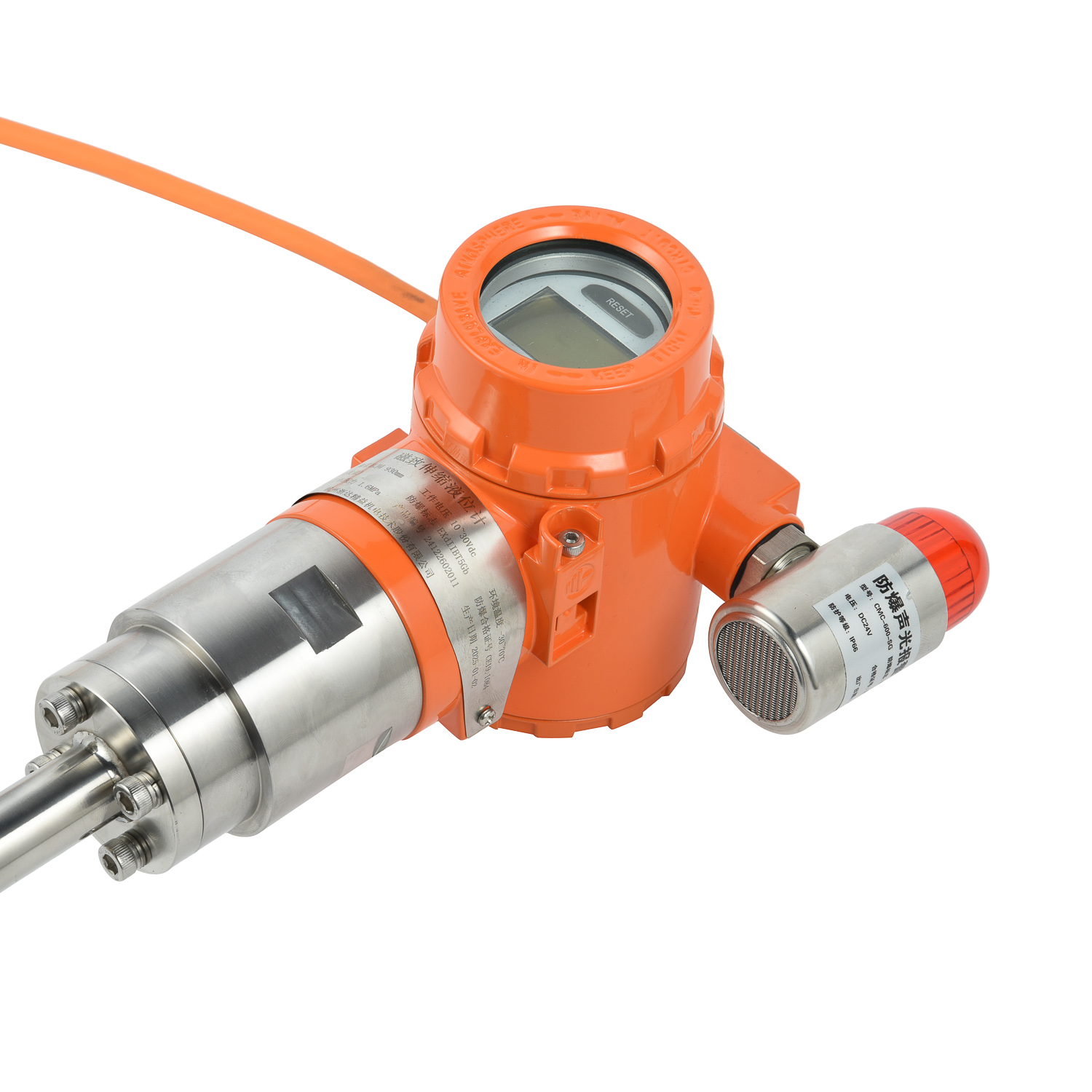
Smart warehouses leverage magnetostrictive sensors to create dynamic inventory tracking systems that operate in real-time. These sensors are integrated into storage racks and retrieval systems, providing continuous feedback on stock levels and item locations. Unlike traditional barcode systems that require line-of-sight scanning, magnetostrictive technology functions effectively in harsh conditions with dust, moisture, or temperature variations. This capability ensures uninterrupted inventory visibility, significantly reducing manual counting errors and improving stock accuracy rates beyond 99.8%.
Enhancing Automated Guided Vehicle Navigation
Automated Guided Vehicles equipped with magnetostrictive positioning systems achieve unprecedented navigation precision in warehouse environments. The sensors provide continuous feedback on vehicle position relative to predefined paths, enabling smooth acceleration, deceleration, and precise stopping at loading points. This technology eliminates the cumulative errors common in wheel-encoder-based systems, allowing AGVs to operate with centimeter-level accuracy even after extended operational periods. The result is optimized material flow, reduced product handling time, and minimized risk of collisions.
Integration with Warehouse Management Systems
The true power of magnetostrictive positioning emerges when integrated with comprehensive Warehouse Management Systems. These sensors feed real-time positional data into central control platforms, creating a digital twin of physical warehouse operations. This integration enables predictive analytics for inventory replenishment, optimized storage allocation based on turnover rates, and intelligent routing for material handling equipment. The seamless data flow between physical sensors and digital management systems represents a cornerstone of Industry 4.0 implementation in modern logistics facilities.
Comparative Advantages Over Alternative Technologies
When evaluated against competing positioning technologies like RFID, GPS, or laser systems, magnetostrictive sensors demonstrate distinct advantages for warehouse applications. They provide higher accuracy than RFID systems, function reliably indoors where GPS signals are unavailable, and maintain performance in conditions that would compromise optical systems. Their rugged construction ensures long-term reliability with minimal maintenance requirements, offering superior total cost of ownership compared to alternative positioning solutions.
Future Applications in Next-Generation Warehouses
As warehouse automation continues to evolve, magnetostrictive sensor technology is poised to play an increasingly vital role. Emerging applications include predictive maintenance systems that monitor equipment wear through position pattern analysis, collaborative robotics with enhanced safety positioning, and augmented reality interfaces that overlay digital information onto physical inventory locations. The technology's scalability and precision make it a fundamental enabler for fully autonomous warehouse operations envisioned in the coming decade.
The implementation of magnetostrictive positioning solutions represents a strategic investment in warehouse optimization. By providing reliable, high-precision location data across multiple operational facets, these sensors form the technological backbone that supports the efficiency, accuracy, and scalability requirements of modern logistics operations. As warehouses continue their digital transformation journey, magnetostrictive positioning stands as a critical technology driving this evolution forward.
 Linear Displacement Sensor Pri
 Linear Displacement Sensor Sel
 Domestic Linear Displacement S
 Linear Displacement Sensor Man