
How do magnetostrictive sensors achieve precise control in surgical robots?
The Critical Need for Precision in Modern Surgery
Surgical robotics has revolutionized modern medicine by enabling procedures with enhanced precision, minimal invasiveness, and improved patient outcomes. At the heart of this technological advancement lies the imperative for absolute control and accuracy. Surgeons operating robotic systems require real-time, sub-millimeter feedback on the position and movement of surgical instruments inside the human body. This is where magnetostrictive sensors emerge as a pivotal technology, providing the high-resolution data necessary for delicate operations such as neurosurgery, ophthalmology, and microsurgical interventions. Their ability to deliver non-contact, precise measurements makes them indispensable for ensuring both safety and efficacy in the operating room.
Understanding the Magnetostrictive Principle: The Physics Behind the Precision
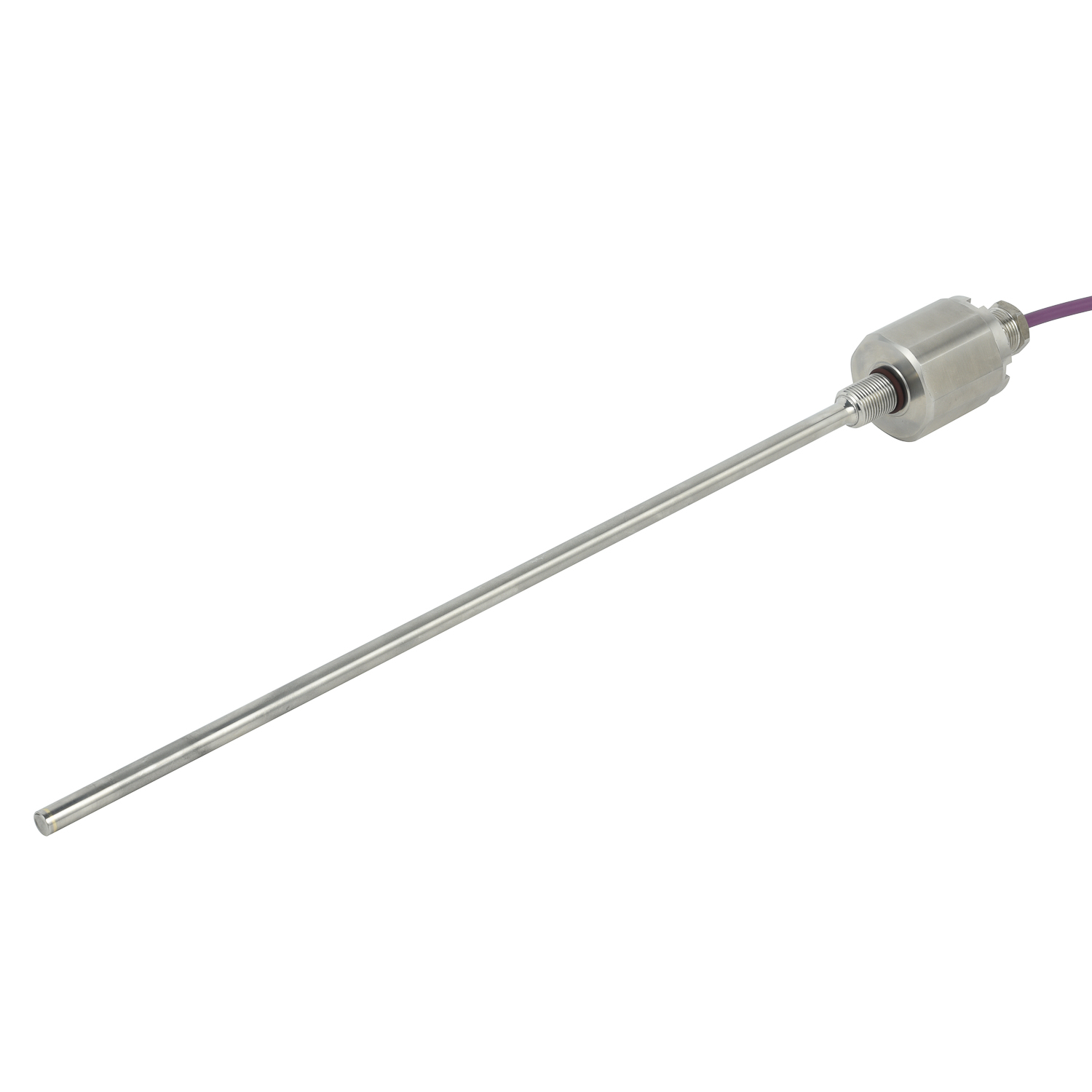
Magnetostrictive sensors operate on a fundamental physical phenomenon: the magnetostrictive effect. This effect describes the property of certain ferromagnetic materials to change their shape or dimensions in the presence of a magnetic field. In a typical sensor design, a waveguide made from a magnetostrictive material is used. A position magnet, attached to the moving part of the robot (like a surgical arm), creates a magnetic field around this waveguide. When a current pulse is sent down the waveguide, it interacts with the magnetic field from the position magnet, generating a torsional strain wave. The time delay between the sent pulse and the received return wave is precisely measured, directly correlating to the exact position of the magnet. This time-of-flight measurement principle allows for resolutions in the micron range.
Key Advantages Over Traditional Sensor Technologies
What sets magnetostrictive sensors apart in the demanding environment of surgical robotics are their distinct advantages. Unlike optical encoders that can be compromised by dust or fluids, or potentiometers that suffer from wear and tear, magnetostrictive sensors offer non-contact measurement. This means there is no physical contact between the sensing element and the moving part, resulting in infinite mechanical life and exceptional reliability. They are inherently immune to most environmental contaminants, a critical feature in sterile surgical settings. Furthermore, they provide absolute position feedback, meaning the system knows the exact position immediately upon startup without needing a reference move, which is crucial for safety in medical applications.
Integration into Surgical Robot Systems for Closed-Loop Control
The true power of magnetostrictive sensors is realized when they are integrated into the robotic system's closed-loop control architecture. These sensors act as the system's "eyes," continuously feeding high-fidelity position data of each joint and end-effector back to the main controller. This controller compares the actual position with the intended trajectory commanded by the surgeon. Any minute deviation is instantly detected, and corrective signals are sent to the actuators to adjust the robot's movement. This continuous feedback loop happens thousands of times per second, creating the fluid, tremor-free, and precise motions that characterize advanced surgical robots, effectively canceling out any unintended vibrations or drift.
Enhancing Safety and Paving the Way for Autonomous Procedures

The unparalleled precision of magnetostrictive sensors directly translates to enhanced patient safety. By ensuring that a robotic arm moves exactly as intended, the risk of accidental tissue damage is significantly reduced. This reliability is foundational for the future of surgery: increasing levels of autonomy. As we move towards systems capable of performing specific tasks, such as suturing or bone milling, autonomously under surgeon supervision, the trust in the sensor data is paramount. Magnetostrictive technology provides the robust and accurate data foundation required for these next-generation robotic assistants, promising a new era of consistency and success in complex surgical operations.
 Field Application of Linear Di
 Model and Specification of Lin
 Import Substitute Linear Displ
 Installation Method of Linear