
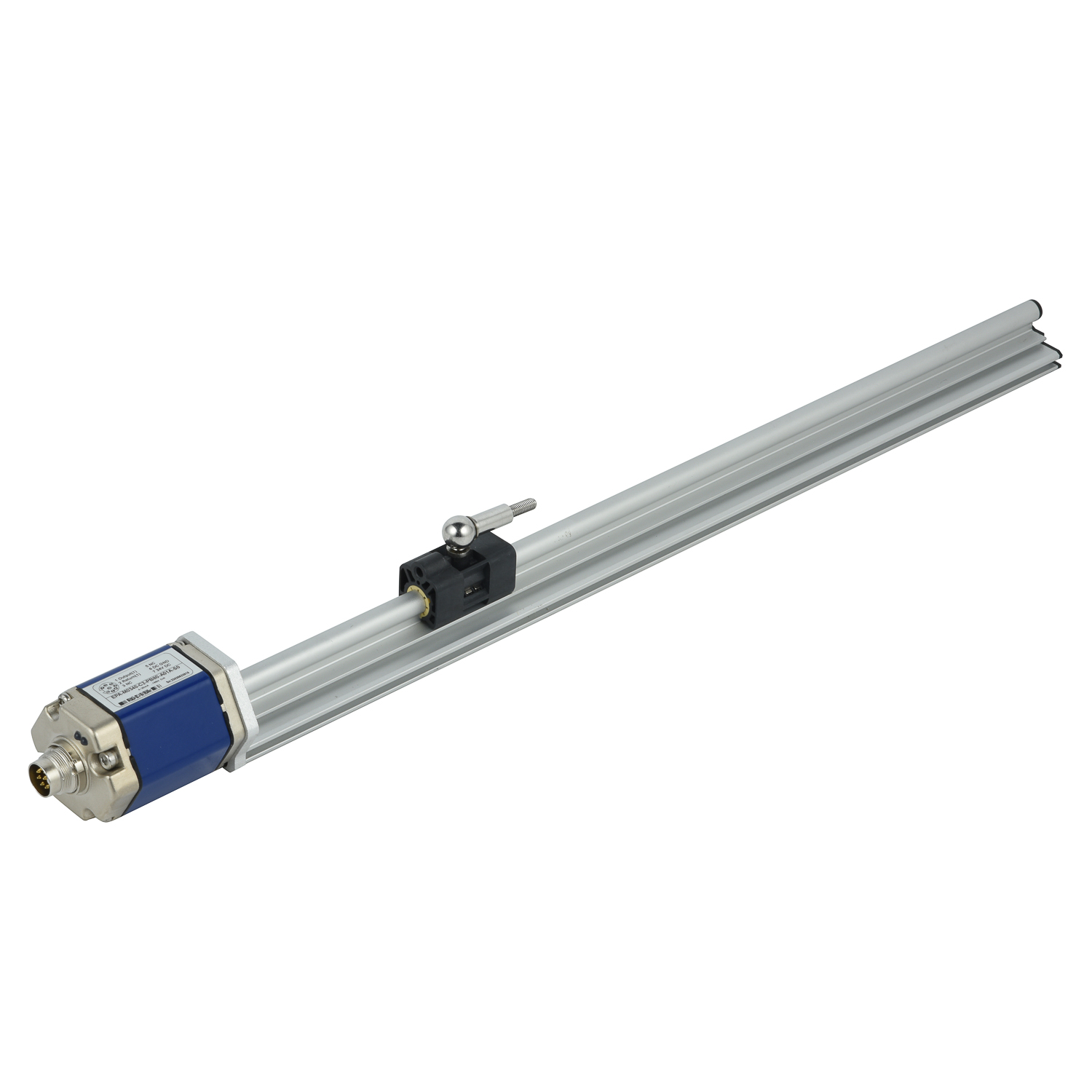
Construction Machinery Built-in Hydraulic Cylinder Linear Displacement Sensor Model and Specification
Built-in linear displacement sensors are essential for intelligent hydraulic cylinders in excavators, loaders, cranes, and drilling rigs. Mounted inside the cylinder rod or barrel, they provide continuous stroke position feedback for automation, end-of-stroke protection, and precise work-tool control in harsh construction environments.
Typical models use magnetostrictive or LVDT sensing technology. A common model code combines cylinder bore, stroke, signal output, and mounting type, such as HCLS-80-900-CAN. For example, an HCLS-80-900-CAN unit indicates 80 mm bore, 900 mm stroke, and CAN output; verify rod bore, cable exit, and safety certification before ordering. Key specifications should be selected by application: measuring range 50-1500 mm; resolution 0.01-0.05 mm; linearity +/-0.05% FS; repeatability <=0.01 mm; supply 9-36 VDC; output CAN J1939, CANopen, 4-20 mA, or 0-10 V; pressure resistance 25-35 MPa; body material stainless steel or 17-4PH; protection IP67/IP69K; operating temperature -40C to +85C; and vibration/shock ratings suited to mobile machinery. Common connectors include Deutsch DT, M12, and flying leads; redundancy and washdown protection are optional. Models can be customized for stroke and output.
When specifying a sensor, confirm cylinder dimensions, rod drilling, pressure peaks, fluid compatibility, connector type, EMC requirements, and controller protocol. A well-matched built-in sensor improves reliability, reduces downtime, and supports predictive maintenance.
 Gate Explosion-proof Linear Di
 Silo Rod-type Linear Displacem
 Reaction Kettle Flange-mounted
 Storage Tank Non-contact Linea