
How to implement anti-impact design in magnetostrictive sensors?
Understanding the Need for Impact Resistance
Magnetostrictive sensors operate in demanding industrial environments where mechanical shocks and vibrations are commonplace. These precision instruments measure position, level, and displacement with exceptional accuracy, but their internal components are vulnerable to sudden impacts. The waveguide, sensing element, and electronics can suffer permanent damage from excessive force, leading to measurement errors or complete failure. Implementing robust anti-impact design isn't just an enhancement; it's a critical requirement for ensuring long-term reliability and reducing maintenance costs in applications like heavy machinery, hydraulic systems, and automated production lines.
Material Selection for Enhanced Durability
The foundation of any anti-impact strategy begins with material science. Selecting appropriate materials can significantly increase a sensor's ability to withstand mechanical stress. Instead of standard aluminum housings, manufacturers often opt for hardened stainless steel (such as 304 or 316 grade) for the outer casing, which provides superior tensile strength and corrosion resistance. For internal components, advanced engineering polymers or composite materials can absorb and dissipate energy more effectively than brittle plastics. The critical waveguide tube itself may be manufactured from specialized alloys that offer a unique combination of high magnetostriction and excellent mechanical toughness, preventing deformation under impact loads.
Structural Reinforcement Techniques
A sensor's physical architecture plays a pivotal role in its impact resistance. Strategic structural reinforcement involves designing the housing with reinforced ribs or a unibody construction to distribute impact forces evenly across the entire frame, rather than allowing stress to concentrate on weak points. Key areas like the mounting flange and cable entry points are often thickened and designed with smooth radii to avoid sharp corners that are prone to cracking. Furthermore, potted electronics—encapsulating the circuit board and sensitive components in a thermally conductive epoxy resin—not only protect against moisture and contaminants but also create a solid block that resists shock and vibration transmitted through the sensor body.
Implementing Advanced Damping Systems
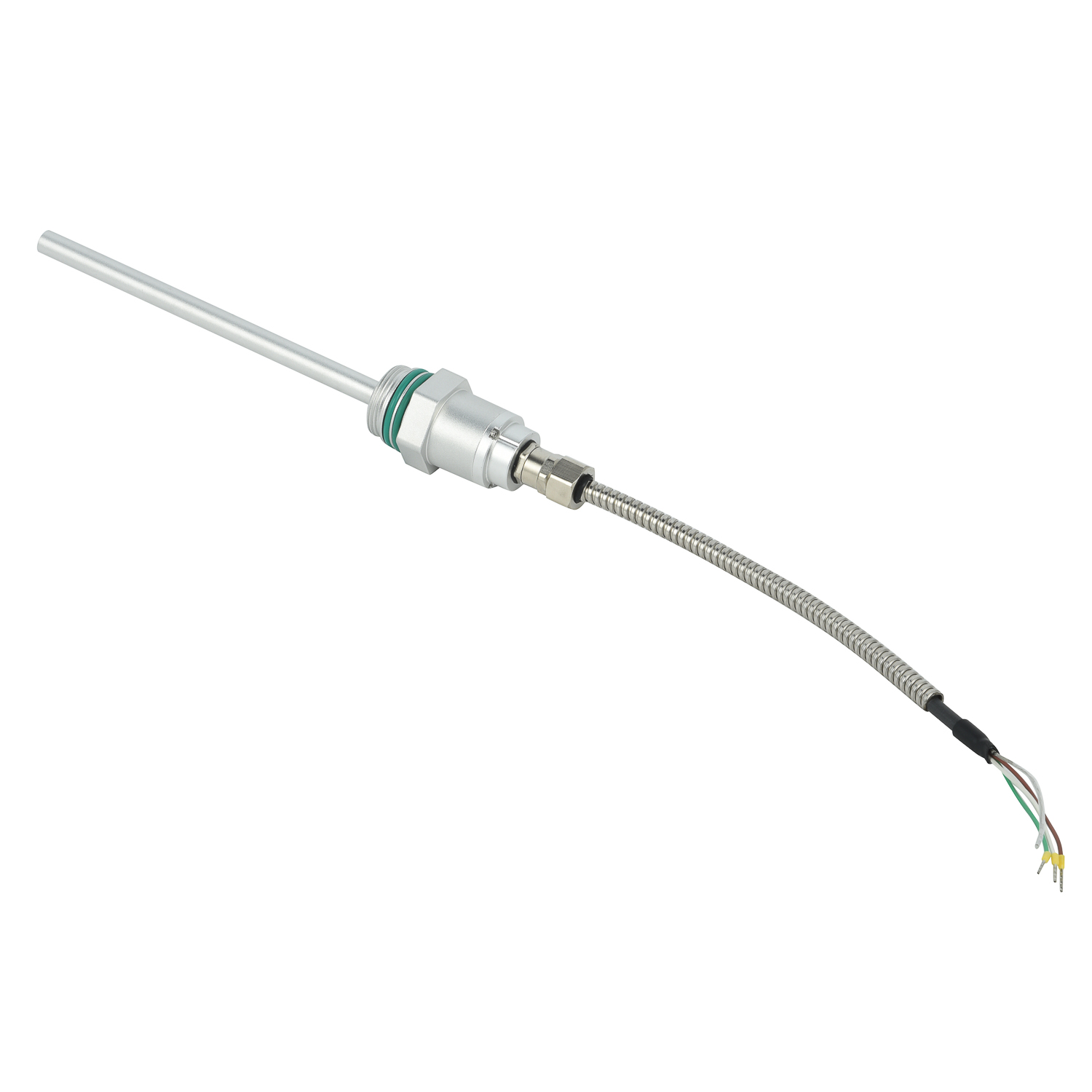
To mitigate the effect of sudden shocks, integrating damping systems directly into the sensor design is highly effective. These systems work by absorbing kinetic energy and converting it into a small amount of heat, thereby reducing the peak force that reaches the core sensing elements. This can be achieved through the use of elastomeric O-rings or gaskets placed at strategic interfaces between the housing and internal components. For high-performance applications, specialized viscous damping fluids or tuned mass dampers can be incorporated. These advanced solutions are particularly valuable in environments with repetitive impacts, such as those found in metal stamping presses or construction equipment.
Electronic Protection and Signal Integrity
Physical protection must be complemented by electronic safeguarding. A sharp impact can generate voltage spikes or cause momentary disconnections that corrupt the sensor's output signal. To counter this, robust electrical design includes transient voltage suppression (TVS) diodes on signal lines to clamp any voltage surges. Additionally, employing ruggedized connectors with positive locking mechanisms prevents accidental disconnection. The firmware within the sensor's microprocessor can also be programmed with error-checking algorithms and filters to identify and reject signal anomalies caused by mechanical shocks, ensuring that the output remains stable and accurate even during transient impact events.
Rigorous Testing and Validation Protocols
Finally, a successful anti-impact design must be validated through rigorous testing that simulates real-world conditions. This goes beyond standard ingress protection (IP) ratings. Sensors should undergo mechanical shock tests based on international standards like IEC 60068-2-27, which subjects them to high-acceleration, short-duration shocks from various angles. Vibration testing per IEC 60068-2-6 is equally important to ensure longevity. These tests help identify potential failure modes and verify that the combination of materials, structure, and electronics performs as intended, guaranteeing the sensor's resilience before it is deployed in the field.
 Installation Method of Magneto
 Working Principle of Magnetost
 Technical Parameters of Magnet
 How Much is Magnetostrictive D