
How to achieve cross-platform data compatibility with magnetostrictive technology?
Understanding Magnetostrictive Technology Fundamentals
Magnetostrictive technology operates on the principle of the magnetostrictive effect, where certain materials change their shape or dimensions when subjected to a magnetic field. This physical phenomenon enables highly precise position and velocity measurements in industrial applications. The technology utilizes a waveguide tube containing a magnetostrictive material, typically an iron-cobalt alloy, which interacts with a permanent magnet mounted on the target object. When a current pulse is sent through the waveguide, it generates a circular magnetic field that interacts with the magnetic field from the permanent magnet, creating a torsional stress wave that travels along the waveguide at sonic speed. The time difference between the current pulse initiation and wave detection provides accurate position data, forming the foundation for reliable cross-platform compatibility.
The Challenge of Cross-Platform Data Compatibility
Achieving seamless data compatibility across different platforms presents significant challenges in industrial environments. Various control systems, data acquisition hardware, and software interfaces often use proprietary protocols and data formats that create interoperability barriers. Legacy systems may communicate through older industrial protocols like Modbus RTU, while modern equipment typically employs EtherCAT, PROFINET, or OPC UA standards. This diversity leads to data silos where critical measurement information becomes trapped within specific subsystems. The inconsistency in data representation, sampling rates, and timestamp synchronization further complicates the integration of magnetostrictive sensor outputs across different platforms, potentially compromising measurement accuracy and system reliability.
Standardizing Data Output Formats
Implementing standardized data output formats is crucial for achieving cross-platform compatibility with magnetostrictive technology. Most advanced magnetostrictive sensors now support industry-standard protocols such as IO-Link, which provides a unified communication interface regardless of the host system manufacturer. IO-Link enables not only standardized data transmission but also parameter storage and device diagnostics through a point-to-point serial communication protocol. For analog applications, ensuring consistent voltage or current output ranges (0-10V, 4-20mA) with clearly defined scaling parameters allows different systems to interpret the data uniformly. Additionally, adopting XML or JSON-based data structures for networked systems facilitates seamless integration with higher-level platforms like SCADA systems and industrial IoT platforms.
Implementing Universal Communication Protocols
The implementation of universal communication protocols serves as the backbone for cross-platform data compatibility in magnetostrictive applications. Modern magnetostrictive sensors increasingly incorporate Ethernet-based protocols such as EtherNet/IP, PROFINET, and Modbus TCP/IP, which provide deterministic real-time communication capabilities. These protocols ensure that position data from magnetostrictive sensors can be seamlessly integrated into diverse automation architectures without custom interface development. For legacy system integration, protocol converters and gateways can translate between different industrial networks while maintaining data integrity and timing requirements. The adoption of OPC UA as a platform-independent standard further enhances interoperability by providing a unified information modeling framework that transcends vendor-specific implementations.
Data Normalization Techniques
Data normalization techniques play a vital role in ensuring consistent interpretation of magnetostrictive measurements across different platforms. This process involves converting raw sensor outputs into standardized engineering units with defined resolution and accuracy specifications. Advanced signal processing algorithms within the magnetostrictive sensor electronics compensate for temperature variations, mechanical stress, and other environmental factors that could affect measurement consistency. Timestamp synchronization using IEEE 1588 Precision Time Protocol (PTP) ensures that position data from multiple sensors across different platforms can be accurately correlated. Data quality indicators embedded in the transmission protocol allow receiving systems to validate measurement integrity and identify potential issues before utilizing the data for critical control functions.
Integration with Industrial IoT Platforms
The integration of magnetostrictive technology with Industrial IoT (IIoT) platforms represents the cutting edge of cross-platform data compatibility. Modern magnetostrictive sensors equipped with embedded intelligence can directly communicate with cloud-based analytics platforms using MQTT and REST API protocols. This enables seamless data flow from the sensor level to enterprise-level systems for comprehensive analysis and decision-making. The sensors can generate structured data packets containing not only position information but also diagnostic data, usage statistics, and predictive maintenance indicators. By adhering to IIoT framework standards like Industry 4.0 reference architecture, magnetostrictive systems ensure compatibility with digital twin implementations and advanced analytics platforms across the industrial ecosystem.
Best Practices for Implementation
Successful implementation of cross-platform compatible magnetostrictive systems requires adherence to several best practices. Begin by conducting a comprehensive audit of existing platforms and communication protocols within your operational environment. Select magnetostrictive sensors that support multiple industrial protocols natively to minimize dependency on protocol converters. Establish clear data mapping specifications that define how position measurements will be represented across different systems, maintaining consistent engineering units and scaling factors. Implement robust network infrastructure with adequate bandwidth to handle the data traffic from multiple sensors without compromising real-time performance. Regularly validate data consistency across platforms through automated monitoring systems that compare measurements at integration points and flag discrepancies for immediate investigation.
 Waterproof Linear Displacement
 Intrinsically Safe Explosion-p
 Explosion-proof Linear Displac
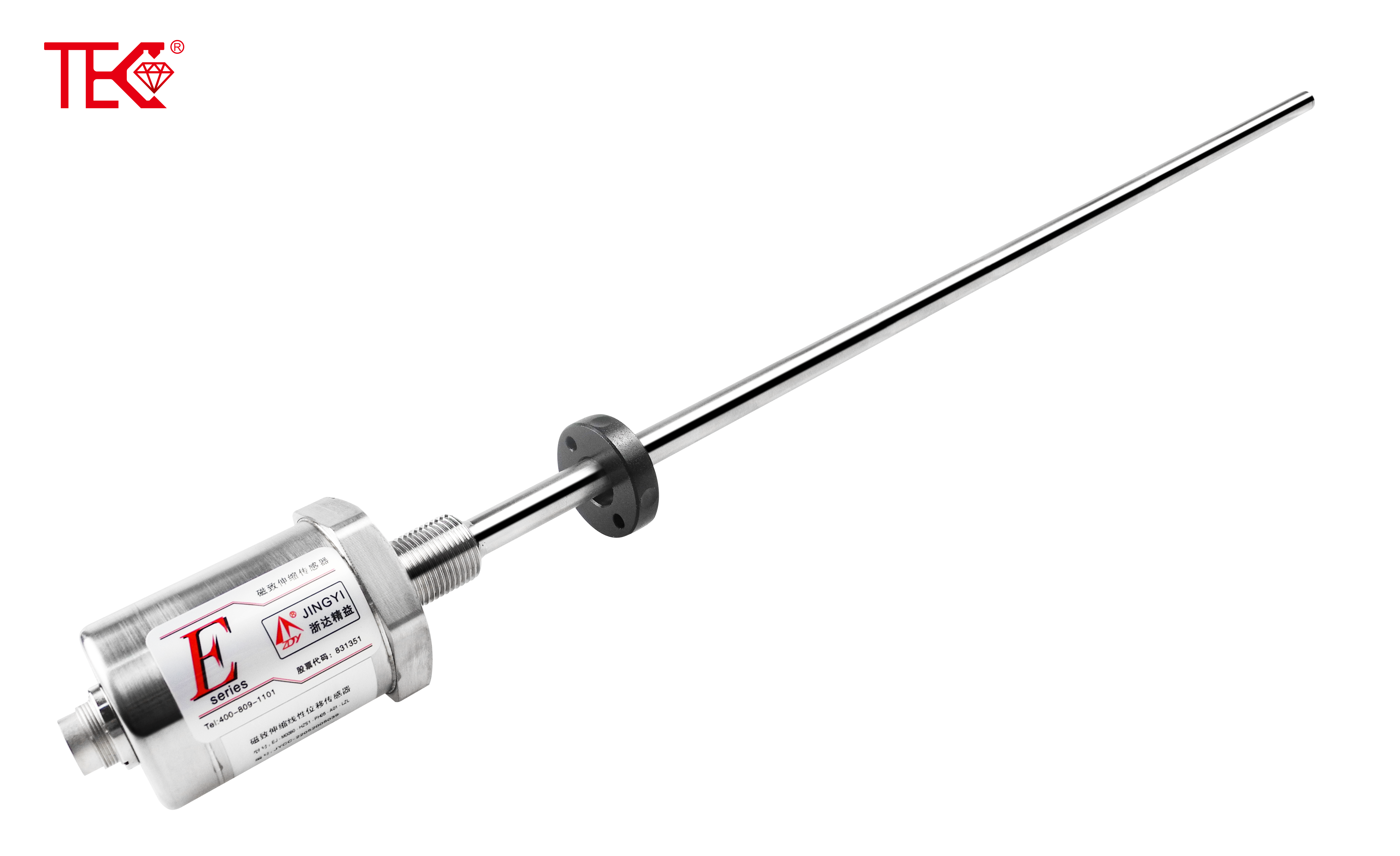 Linear Displacement Sensor