
How do magnetostrictive sensors enable precision control in 3D printing?
In the rapidly evolving world of additive manufacturing, achieving micron-level precision has become the holy grail for industry professionals. Magnetostrictive sensors represent a groundbreaking technological advancement that addresses this very challenge. These sophisticated devices are revolutionizing how we monitor and control the 3D printing process, offering unprecedented accuracy that was previously unattainable with conventional sensor technology.
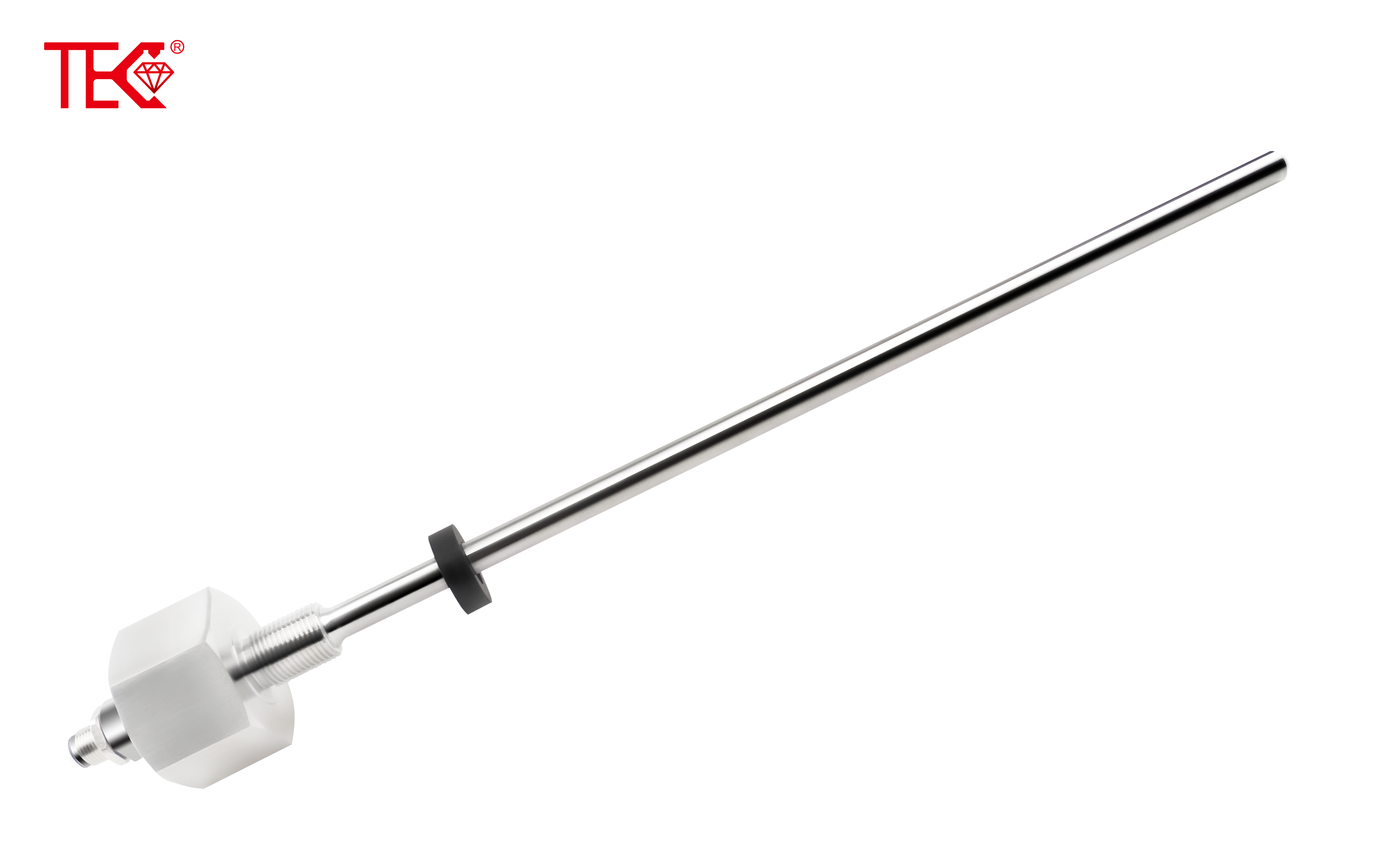
The Fundamental Principle of Magnetostrictive Sensing
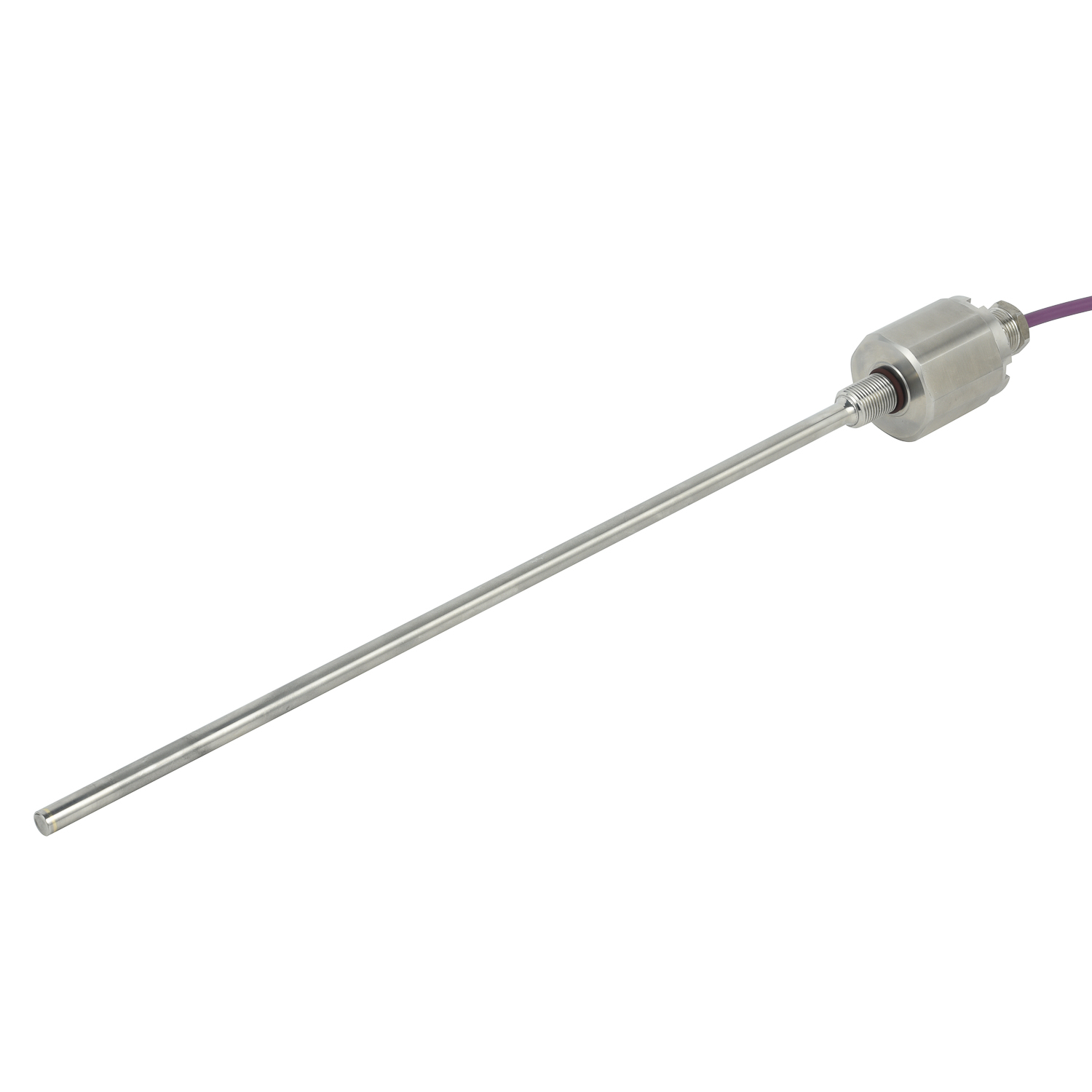
At their core, magnetostrictive sensors operate on the fascinating physical phenomenon where certain materials change their shape or dimensions when subjected to a magnetic field. This magnetostriction effect enables these sensors to detect position, velocity, and force with exceptional accuracy. In 3D printing applications, a permanent magnet is typically attached to the moving component of the printer, such as the extruder assembly. As this magnet moves along the sensor waveguide, it generates torsional strain waves that propagate at ultrasonic speeds. The system precisely measures the time delay between wave generation and detection, calculating position with resolutions down to nanometers. This fundamental principle forms the basis for the remarkable precision control capabilities that magnetostrictive technology brings to additive manufacturing.
Real-time Monitoring of Critical Printing Parameters
The implementation of magnetostrictive sensors enables comprehensive real-time monitoring of essential printing parameters throughout the manufacturing process. These advanced sensors continuously track extruder position, nozzle pressure, and material flow rates with exceptional fidelity. Unlike traditional optical encoders that can be compromised by dust or debris common in 3D printing environments, magnetostrictive sensors maintain their accuracy in challenging conditions. They provide instantaneous feedback on layer deposition consistency, detecting variations as small as a few micrometers. This capability allows printers to compensate for potential defects before they manifest in the final product, ensuring each layer meets exact specifications. The real-time data acquisition happens at sampling rates exceeding 10 kHz, capturing even the most rapid changes in printing dynamics.
Enhanced Closed-loop Control Systems
Integrating magnetostrictive sensors creates sophisticated closed-loop control systems that significantly improve printing accuracy. These systems continuously compare actual printer performance against predetermined digital models, making instantaneous adjustments to maintain perfect alignment with design specifications. When the sensors detect positional deviations or extrusion irregularities, the control system automatically compensates by adjusting motor movements, temperature settings, or material flow rates. This proactive approach to error correction prevents the accumulation of minor inaccuracies that typically lead to failed prints or compromised structural integrity. The closed-loop feedback mechanism enables printers to maintain dimensional accuracy within 5 micrometers throughout extended printing operations, even when working with challenging materials or complex geometries.
Applications in High-precision Additive Manufacturing
The precision capabilities of magnetostrictive sensors find particularly valuable applications in industries where micrometer-level accuracy is non-negotiable. In aerospace component manufacturing, these sensors ensure that critical parts meet rigorous tolerance requirements for safety and performance. The medical implant industry leverages this technology to produce custom prosthetics and surgical guides with perfect anatomical fit. Electronics manufacturers utilize magnetostrictive-equipped printers to create intricate circuit boards and microfluidic devices with precisely controlled conductive pathways. Even in automotive prototyping, where rapid iteration meets demanding precision standards, these sensors enable the production of functional components that perform identically to mass-produced parts. The technology proves especially beneficial when printing with advanced materials like carbon fiber composites or high-temperature alloys that require exact deposition control.
Future Developments and Industry Impact
As additive manufacturing continues its trajectory toward production-grade applications, magnetostrictive sensor technology is evolving to meet increasingly demanding requirements. Researchers are developing miniaturized sensors that can be integrated directly into print heads for even more localized control. Smart sensor systems with embedded artificial intelligence capabilities are emerging, capable of predicting potential failures based on subtle pattern changes in the sensor data. The integration of multiple magnetostrictive sensors along different printer axes enables comprehensive spatial monitoring that accounts for thermal expansion and mechanical wear. Industry experts predict that within five years, magnetostrictive technology will become standard equipment in industrial-grade 3D printers, potentially trickling down to professional and eventually consumer models as costs decrease. This technological progression promises to bridge the gap between prototyping and final part production, making 3D printing a truly viable manufacturing solution for precision-critical applications.
 Explosion-proof LVDT Displacem
 LVDT Displacement Sensor
 Linear Displacement Sensor Fau
 Field Application of Linear Di