
Why are magnetostrictive sensors more suitable for humid environments?
In numerous industrial settings, from food processing plants to wastewater treatment facilities, humidity presents a significant challenge for sensitive electronic equipment. While many sensor technologies falter under these conditions, magnetostrictive sensors demonstrate remarkable resilience. Their inherent design principles make them uniquely suited to operate reliably where moisture is a constant factor. This article explores the key reasons behind their superior performance in demanding, humid environments.
Robust Sealed Construction and Encapsulation
The primary defense of a magnetostrictive sensor against humidity is its hermetically sealed construction. Unlike some sensors that may have vents or less robust seals, magnetostrictive sensors are typically housed in a stainless steel tube that is completely sealed at both ends. The internal waveguide, which is the core sensing element, is protected within this sealed environment. This physical barrier prevents moisture ingress, safeguarding the sensitive electronics from condensation, direct water spray, and even temporary submersion in many cases. This level of protection is crucial for preventing short circuits and corrosion that would cripple other sensor types.
Inherent Immunity to Condensation and Moisture Buildup
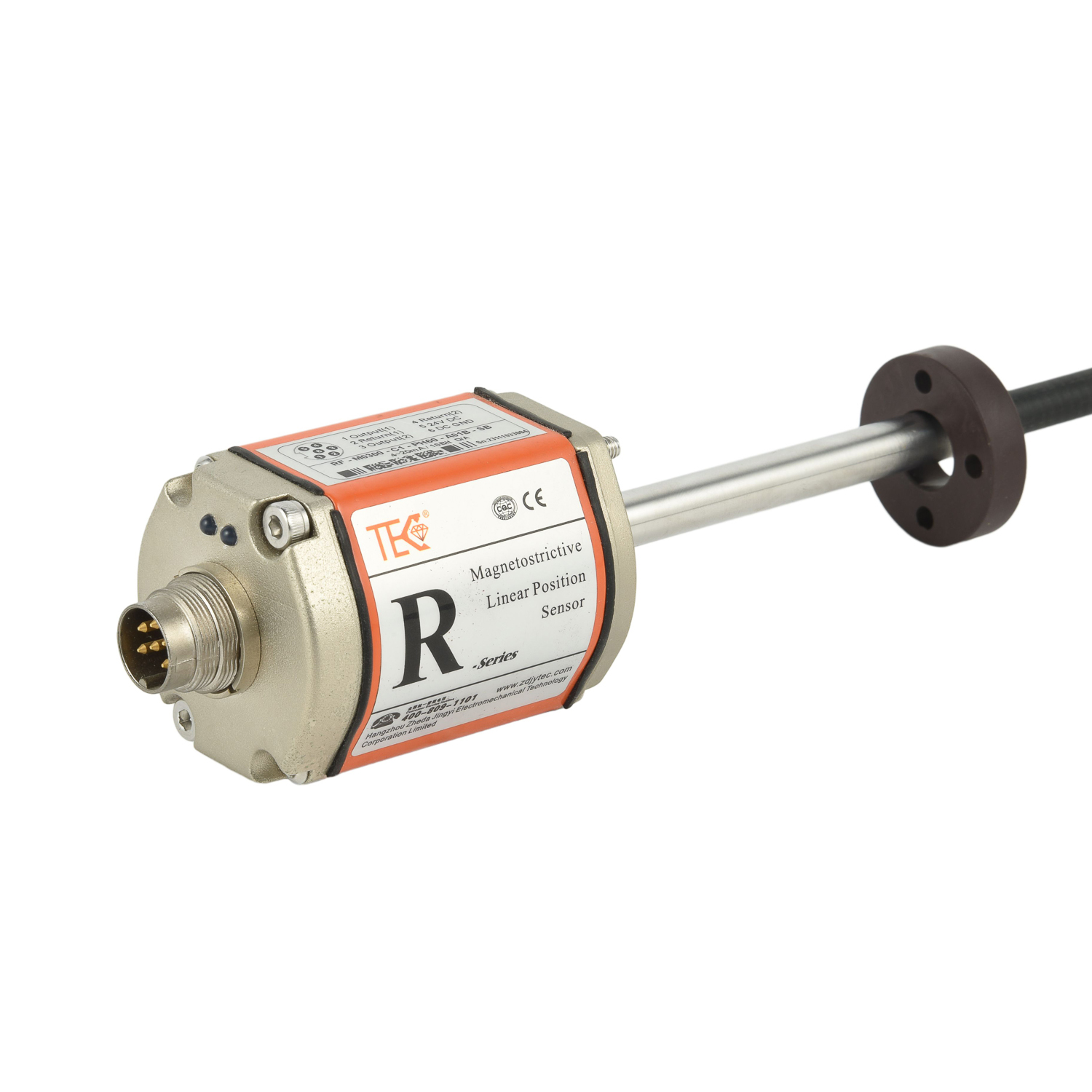
Condensation occurs when a surface is cooler than the dew point of the surrounding air, causing water vapor to turn into liquid. Magnetostrictive sensors are less susceptible to the damaging effects of condensation. Their sealed design ensures that even if condensation forms on the outside of the sensor housing, the internal components remain dry and fully functional. Furthermore, the materials used, such as high-grade stainless steel, are naturally resistant to corrosion caused by constant exposure to moisture. This eliminates a common failure mode for sensors in applications with high humidity cycles.
Stable Performance Without Drift in High Humidity
A critical advantage of magnetostrictive technology is its exceptional measurement stability. The sensing principle relies on the interaction of a magnetic field with a magnetostrictive waveguide, a process that is fundamentally unaffected by the presence of humidity outside the sealed tube. This means that the sensor's accuracy and repeatability do not drift over time, even when operating at 95% relative humidity or higher. For processes requiring precise positional feedback, such as level sensing in tanks or actuator control, this long-term stability is invaluable and ensures consistent process quality.
Superiority Over Alternative Sensing Technologies
When compared to other popular sensing technologies like capacitive, ultrasonic, or optical sensors, magnetostrictive sensors have a clear advantage in wet conditions. Capacitive sensors can experience signal drift due to changes in the dielectric constant of moist air. Ultrasonic sensors may have their sound waves attenuated by humid air, leading to inaccurate readings. Optical sensors are prone to lens fogging and contamination from moisture. Magnetostrictive sensors, being a contact-based technology that is fully enclosed, avoid these pitfalls entirely, offering a more reliable and maintenance-free solution.
Ideal for Demanding Industrial Applications
The resilience of magnetostrictive sensors makes them the preferred choice for a wide range of challenging applications. They are extensively used in hydraulic systems, where they are exposed to oil mist and potential condensation. In the food and beverage industry, they provide reliable feedback for machines that require frequent washdowns with high-pressure, high-temperature water. Chemical processing, marine applications, and outdoor installations also benefit from their ability to withstand harsh, humid atmospheres without compromising on performance or lifespan.
 YourUltimatePrimeronMagnetostr
TheCoreofInnovation:RecentBrea
DemystifyingLinearity:WhyIt'sC
TheLifecycleStory:Installation
YourUltimatePrimeronMagnetostr
TheCoreofInnovation:RecentBrea
DemystifyingLinearity:WhyIt'sC
TheLifecycleStory:Installation