
Mining Overhead Crane LVDT Displacement Sensor Technical Parameters
An LVDT displacement sensor for mining overhead cranes converts linear movement into a stable electrical signal for position control, overload protection, and safe load handling. Because mining cranes face dust, moisture, vibration, and wide temperature swings, sensor parameters must be selected for reliability rather than laboratory accuracy alone.
Typical measuring ranges are 0-50 mm, 0-100 mm, 0-200 mm, or custom strokes. Linearity is usually +/-0.25% to +/-0.5% FS, with repeatability better than 0.01 mm and resolution limited mainly by the signal conditioner. Excitation is commonly 3-5 VAC or 24 VDC for integrated transmitters. Output options include 4-20 mA, 0-10 V, +/-10 V, RS485, or CANopen. Frequency response should cover crane travel and hoist motion, often 50-200 Hz.
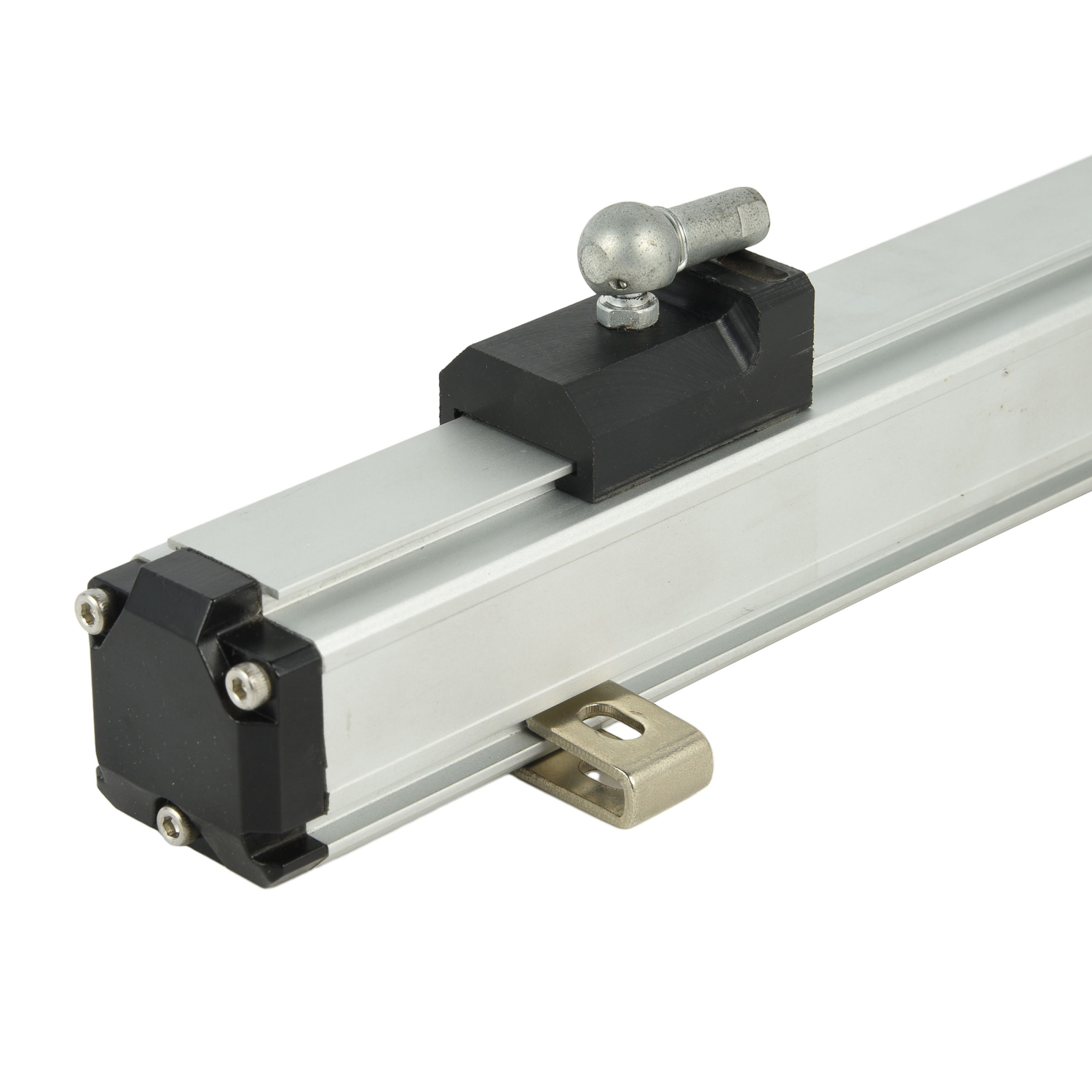
Environmental ratings matter: operating temperature -40 C to +85 C, IP67 or IP68 protection, stainless steel or nickel-plated housing, and resistance to shock and vibration. EMC shielding prevents interference from motors and brakes. Key mechanical choices include a 6 mm or 8 mm core, M12 or M18 threaded housing, 1 m to 10 m cable length, and a mounting bracket that keeps the sensor aligned with the crane rail or hoist drum. Hysteresis should stay below 0.1% FS, and zero/span adjustment should be accessible without removing the housing. For mining overhead cranes, choose LVDT sensors with rugged cables, pressure-tolerant seals, and easy calibration to maintain precise displacement feedback in demanding conditions.
 Cement Bucket Wheel Stacker-re
Mining Overhead Crane LVDT Dis
 Metallurgy Hydraulic Cylinder
 Grain and Oil Storage Tank Hig