
Water Conservancy Hoist Corrosion-resistant Magnetostrictive Displacement Sensor Working Principle
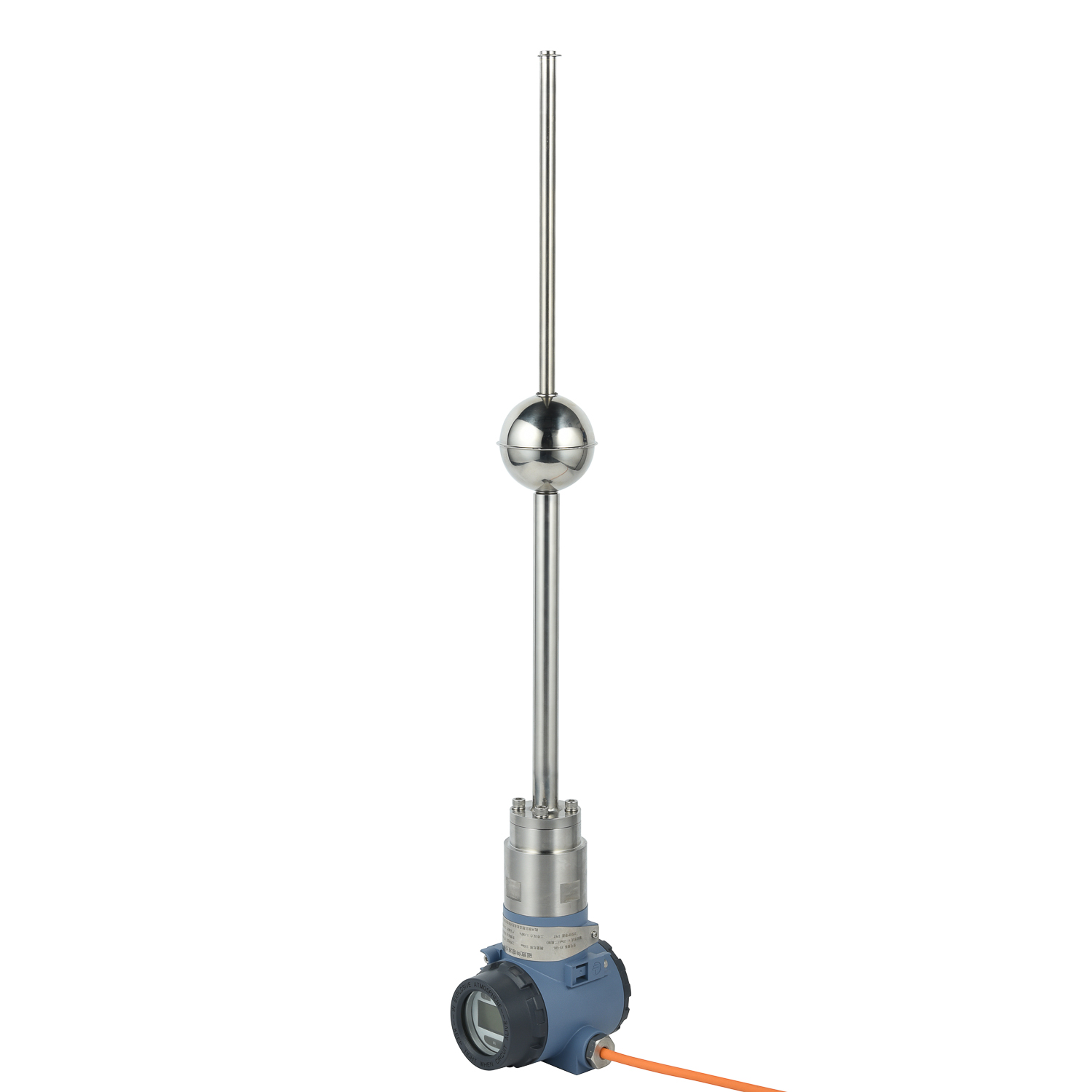
Corrosion-resistant magnetostrictive displacement sensors deliver reliable absolute position feedback for water conservancy hoists in humid, splash-prone conditions. Their working principle is based on magnetostriction. A sensor electronics module sends a short current pulse along a magnetostrictive waveguide wire, generating a circular magnetic field. A permanent position magnet on the moving hoist part creates an axial magnetic field. Where the two fields intersect, a torsional strain wave is produced. This wave travels at a stable ultrasonic speed to the pickup coil at the sensing end, which converts it into an electrical signal. By measuring the time between the current pulse and the returned wave, the sensor calculates the magnet position. The measurement is absolute and non-contact, so it resists wear and signal drift during frequent hoist operation.
For water conservancy hoists, corrosion resistance is essential. The sensor uses a stainless steel or anti-corrosion alloy housing, an IP68 sealed structure, and a PTFE/PFA protective coating. Waterproof connectors, encapsulation, and breathable membranes block moisture and condensation. Surge protection and EMI shielding keep signals stable near motors and variable-frequency drives. Temperature compensation supports outdoor accuracy. Position data is sent to the PLC as analog, SSI, or fieldbus output for precise gate opening control, limit protection, and remote monitoring. The design combines magnetostrictive precision with corrosion protection.
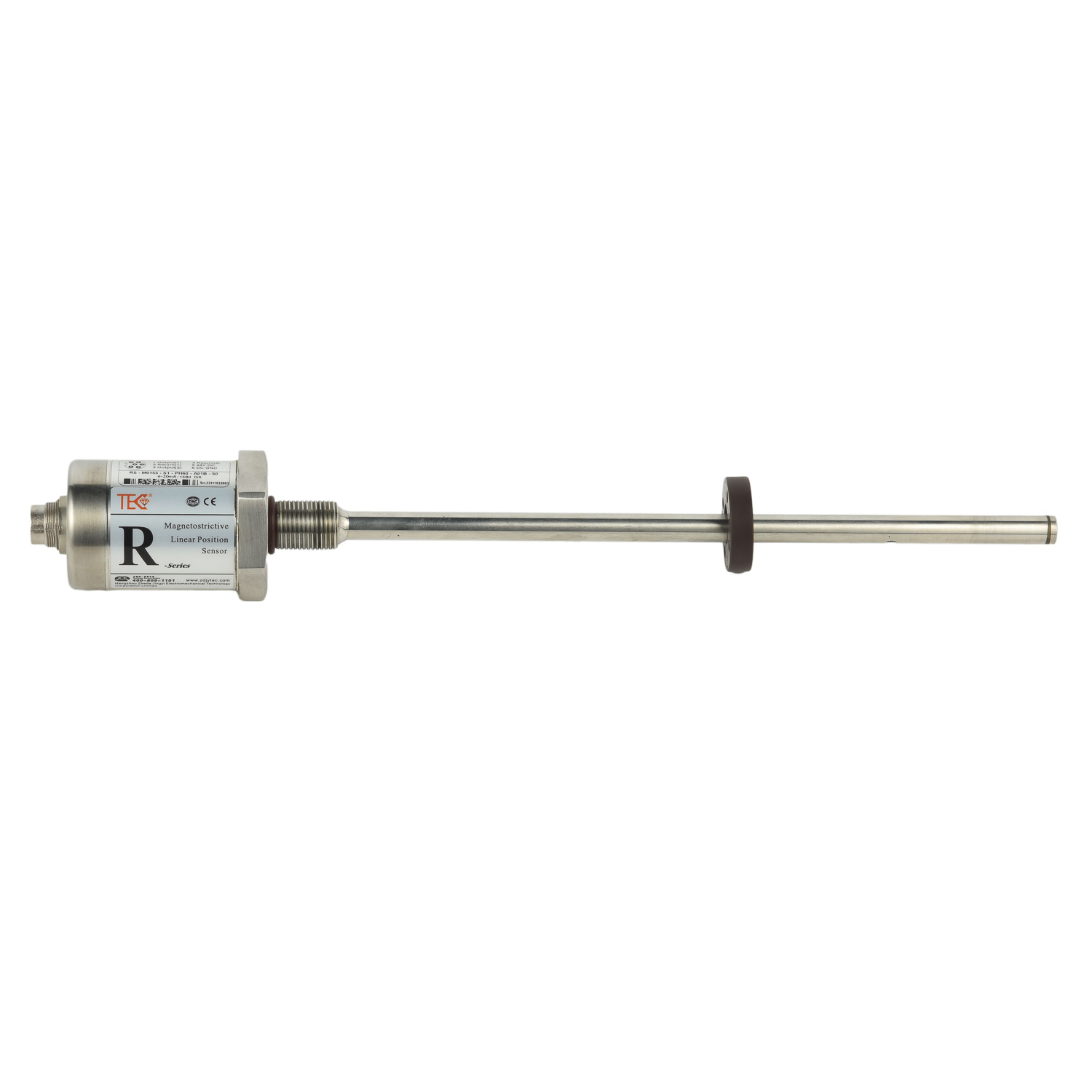
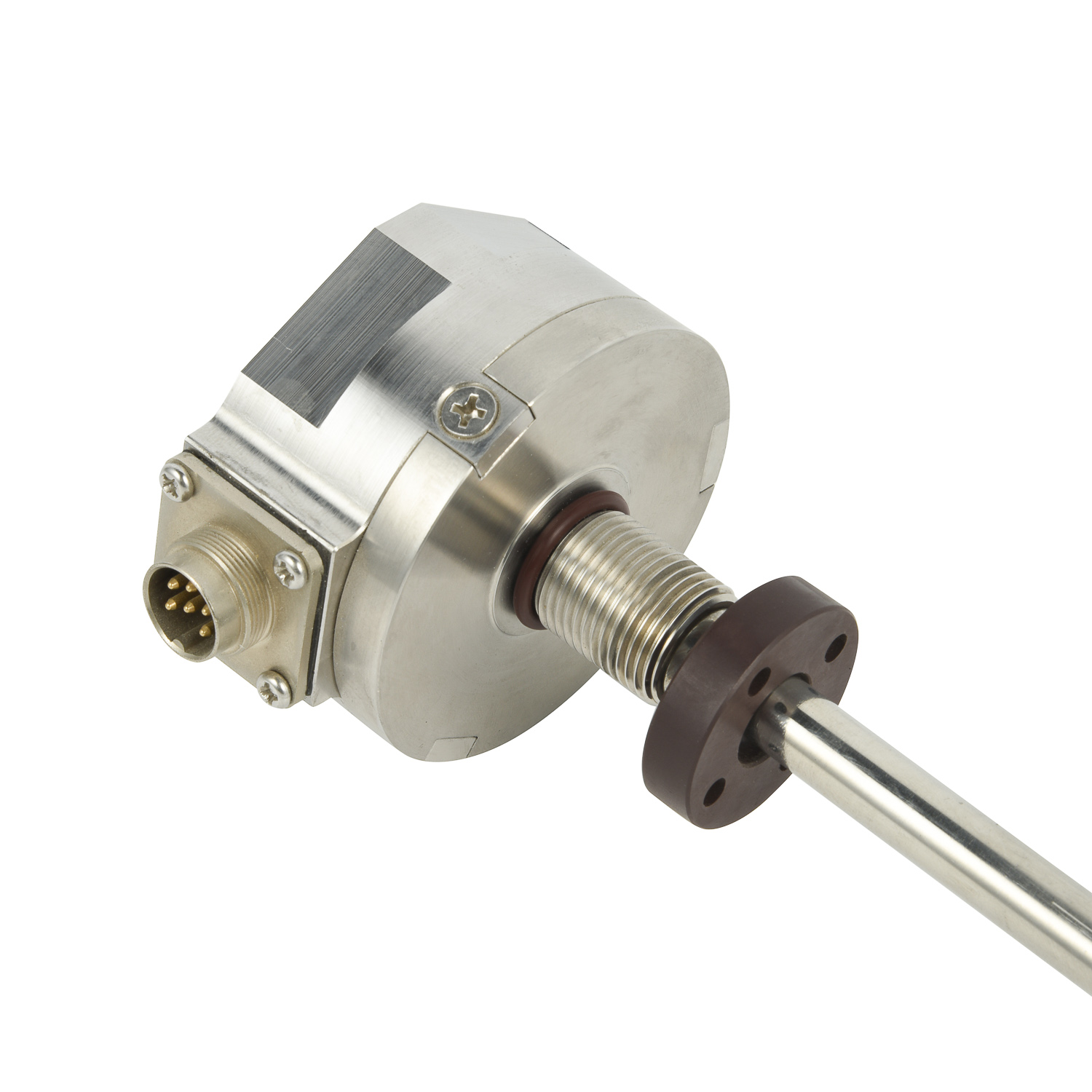 Reaction Kettle Flange-mounted
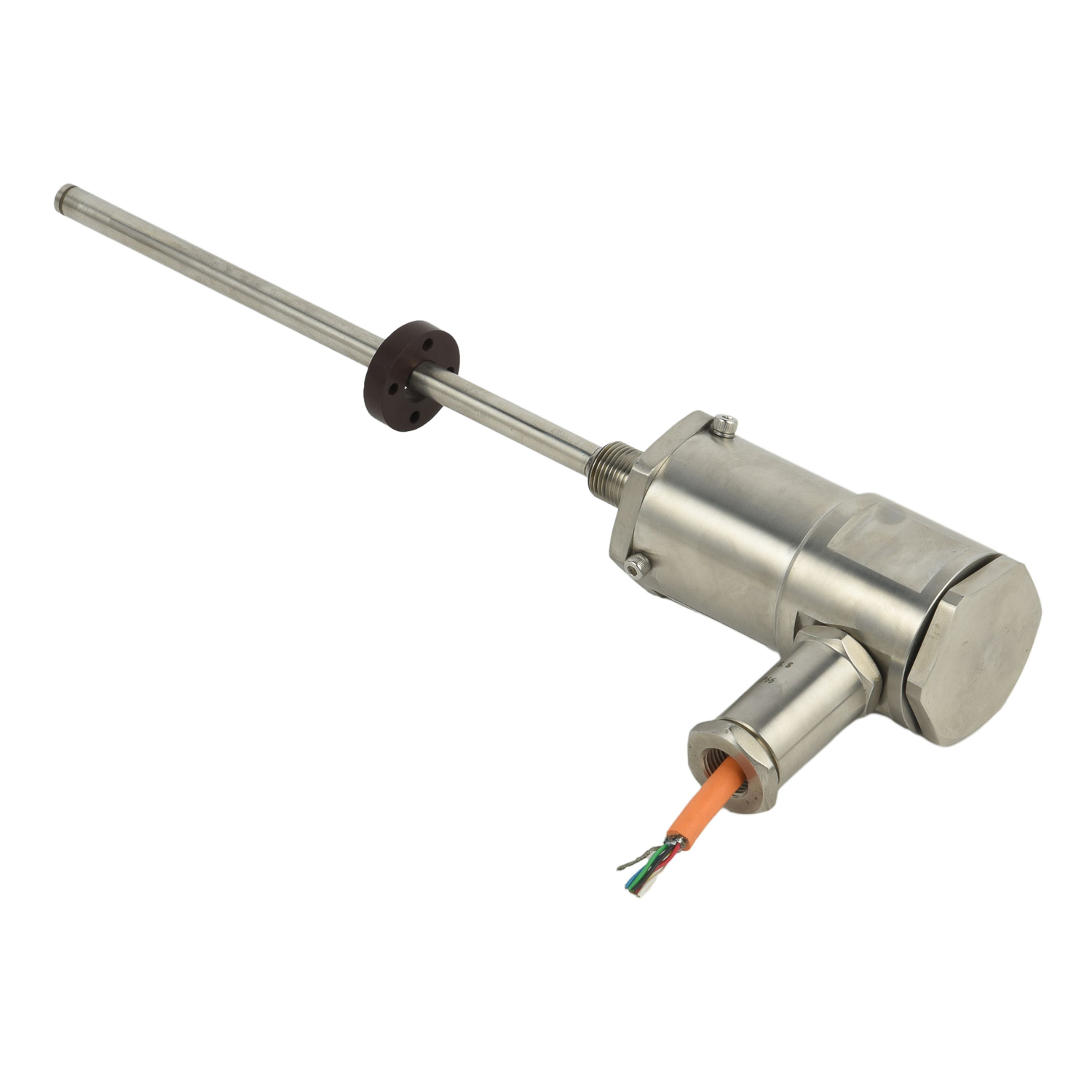 Storage Tank Non-contact Magne
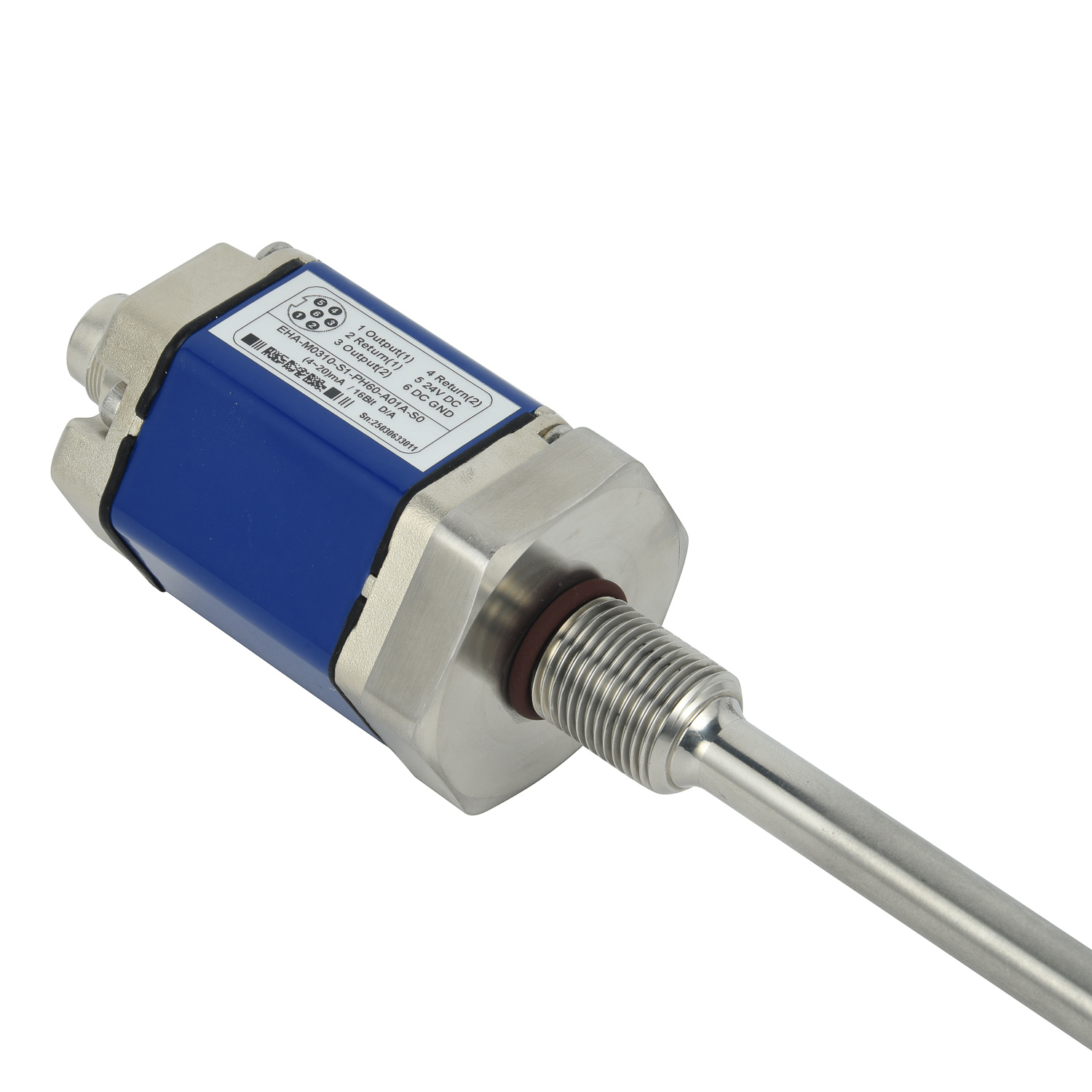 Material Tank Intrinsically Sa
 Bridge Crane Corrosion-resista